Guides & Comparisons · 2026-07-22
What Is MoRTH Clause 810? Metal Beam Crash Barrier Explained
A plain-English explanation of MoRTH Section 800 clause 810 — the clause that defines the metal beam crash barrier on Indian highways — and what it requires.
MoRTH stands for the Ministry of Road Transport and Highways. Its 'Specifications for Road and Bridge Works' is the master document Indian highway projects are built to. Section 800 of that document covers road furniture and safety appurtenances, and clause 810 within Section 800 is the clause that defines the metal beam crash barrier — both the W-beam and the Thrie-beam profiles.
What clause 810 fixes. In practice, clause 810 (read with IRC:119) sets out: the barrier types (W-metal beam and Thrie beam); the steel (structural steel to IS 2062); the rail thickness (3 mm nominal, with 2.67 mm on some project specifications); the panel length (4.32 m so panels lap and splice); the posts (commonly mild-steel channel sections such as ISMC 150x75) and their spacing (2 m centre-to-centre, reduced to 1 m at hazards); the spacer/blocking piece; the mounting height; and the finish — hot-dip galvanising to a 550 g/m² minimum zinc coating (IS 4759 / IS 2629).
Why it is quoted in tenders. Because payment on a highway project is certified against the specification, a supply that does not meet clause 810 — under-thickness rail, low coating mass, wrong post section or short embedment — can be rejected at inspection. Citing clause 810 is how a consultant makes the requirement unambiguous.
How IRC:119 fits in. Clause 810 covers the material and construction; IRC:119 'Guidelines for Traffic Safety Barriers' provides the design framework — containment levels, working width and where each barrier type belongs. Together they define a compliant metal beam crash barrier.
Metal Beam Barriers manufactures metal beam, W beam and Thrie beam crash barriers to the clause 810 requirements and IRC:119 geometry, with mill test certificates and coating-mass reports supplied for tender compliance. Send your requirement for a factory-direct quotation.
Related Products
The systems this guide covers
MBB-5045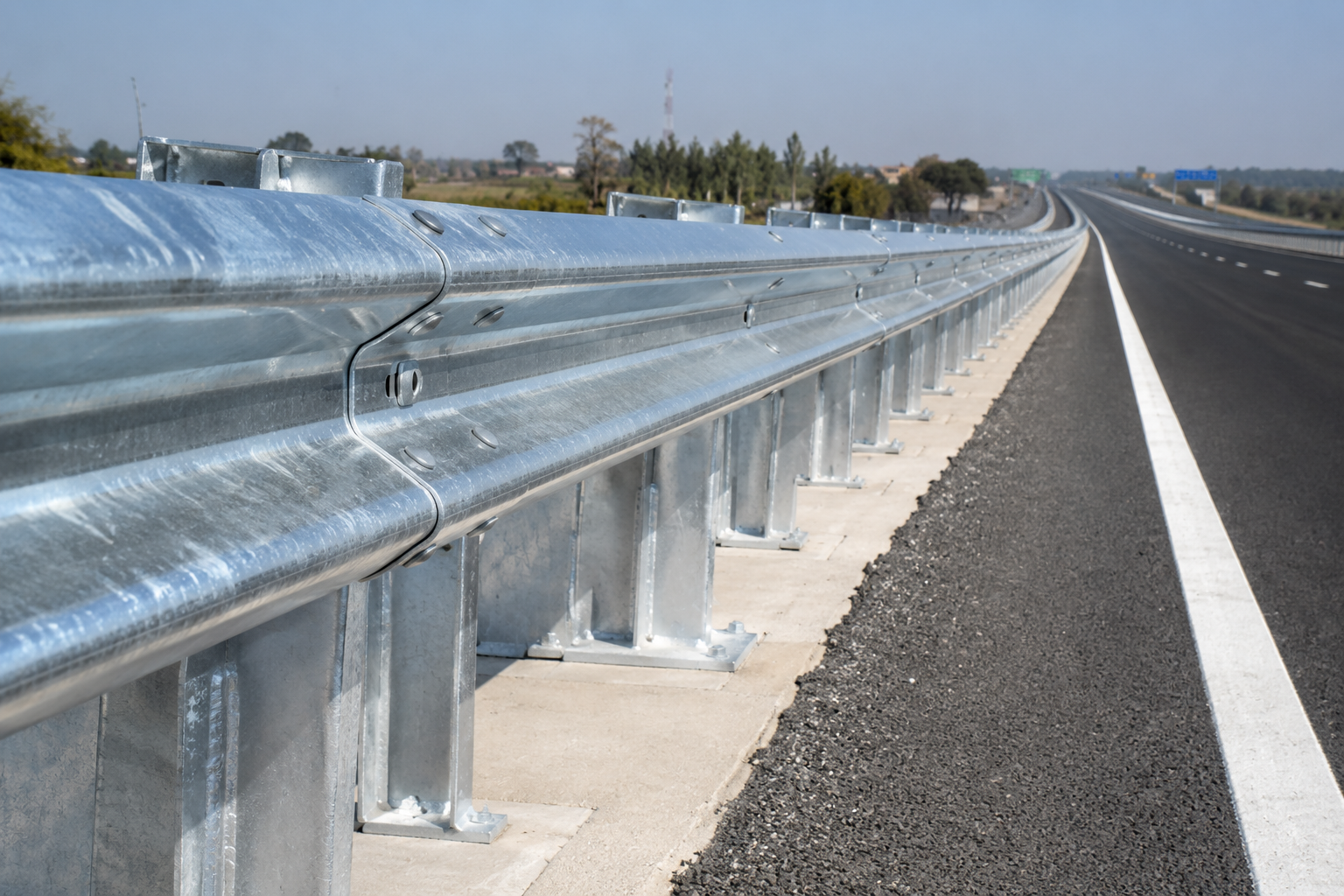
Road Safety & Highway Barriers
Highway Crash Barrier
Highway crash barrier systems designed and manufactured as per MORTH and IRC specifications for highways, expressways, bridges and medians. Available in W Beam and Thrie Beam configurations with hot-dip galvanised finish for maximum durability and road safety.
View productMBB-2613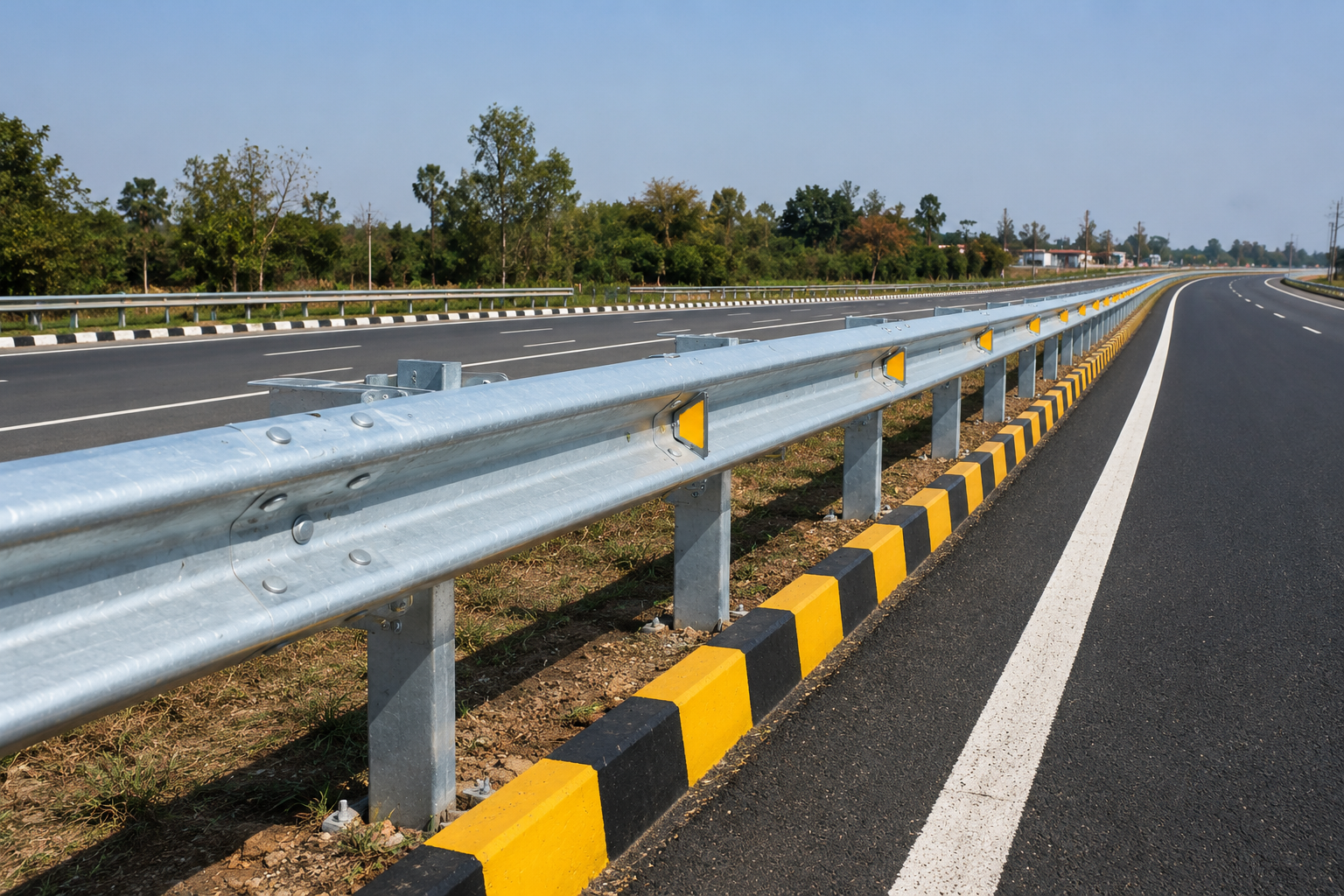
Road Safety & Highway Barriers
Highway Guardrail
Highway guardrail systems manufactured as per MORTH and IRC standards for highways, expressways, bridges and medians. Available in W Beam and Thrie Beam configurations with heavy-duty hot-dip galvanised coating for long-term corrosion protection.
View productMBB-2751
Road Safety & Highway Barriers
Metal Beam Crash Barrier
High-performance Metal Beam Crash Barriers manufactured to MoRTH Section 810 standards. Hot-dip galvanized for maximum durability and impact absorption on highways.
View productMore Guides
Related Guides & Comparisons reading
Guides & Comparisons · 2026-07-21
Crash Barrier Containment Levels and Working Width (IRC:119) Explained
Containment level, working width and impact severity are the three IRC:119 / EN 1317 properties that define crash barrier performance. Here is what each means.
Read articleGuides & Comparisons · 2026-07-20
Crash Barrier Terminology: A MoRTH and IRC:119 Glossary
A quick-reference glossary of the crash barrier and guardrail terms used in MoRTH Section 800 and IRC:119 — from W-beam to working width, containment to spacer.
Read articleGuides & Comparisons · 2026-07-19
How to Choose the Right Crash Barrier: A MoRTH Decision Guide
A step-by-step decision guide for choosing the right crash barrier — W beam, Thrie beam or concrete — based on traffic, alignment, hazard and space, per MoRTH and IRC:119.
Read articleNeed this for a live project?
Talk to the Metal Beam Barriers desk for specifications, pricing and dispatch.