Guides & Comparisons · 2026-07-21
Crash Barrier Containment Levels and Working Width (IRC:119) Explained
Containment level, working width and impact severity are the three IRC:119 / EN 1317 properties that define crash barrier performance. Here is what each means.
1. Containment level — 'what can it stop?' This grades the barrier by the vehicle mass and speed it is designed to contain and redirect. The bands are: low containment (T1, T2, T3), normal containment (N1, N2 — cars up to about 1500 kg), higher containment (H1, H2 — buses and rigid/articulated trucks) and very high containment (H4a, H4b). A W-beam typically serves normal-containment locations; a Thrie beam reaches higher containment; concrete covers the highest.
2. Working width — 'how much room does it need to work?' A flexible barrier deflects on impact, and working width is the total lateral distance from the traffic face of the barrier to the furthest point any part of the system reaches during that impact. It is classified W1 (up to 0.6 m) through W8 (up to 3.5 m). The design rule is spatial: you must have at least the working width of clear space behind the barrier line, or the deflecting barrier — and the vehicle behind it — can still strike the hazard the barrier was meant to shield. (Note: these W1–W8 working-width classes are different from the 'W-beam' profile name — an easy source of confusion.)
3. Impact severity level — 'what does it do to occupants?' Graded A, B or C, this describes the severity of the impact on the vehicle's occupants, with A being the least severe. A flexible metal beam barrier generally imposes lower severity than a rigid one.
How to specify. State all three on your BOQ — containment level, the working-width class the site can accommodate, and the severity level — plus the profile (W or Thrie beam). This is what lets a supplier confirm the post spacing and system that meets your site's real constraints.
Metal Beam Barriers manufactures W beam and Thrie beam crash barriers to IRC:119 geometry and can help translate your site constraints into the correct containment, working-width and profile specification. Send your details for a factory-direct quotation.
Related Products
The systems this guide covers
MBB-5045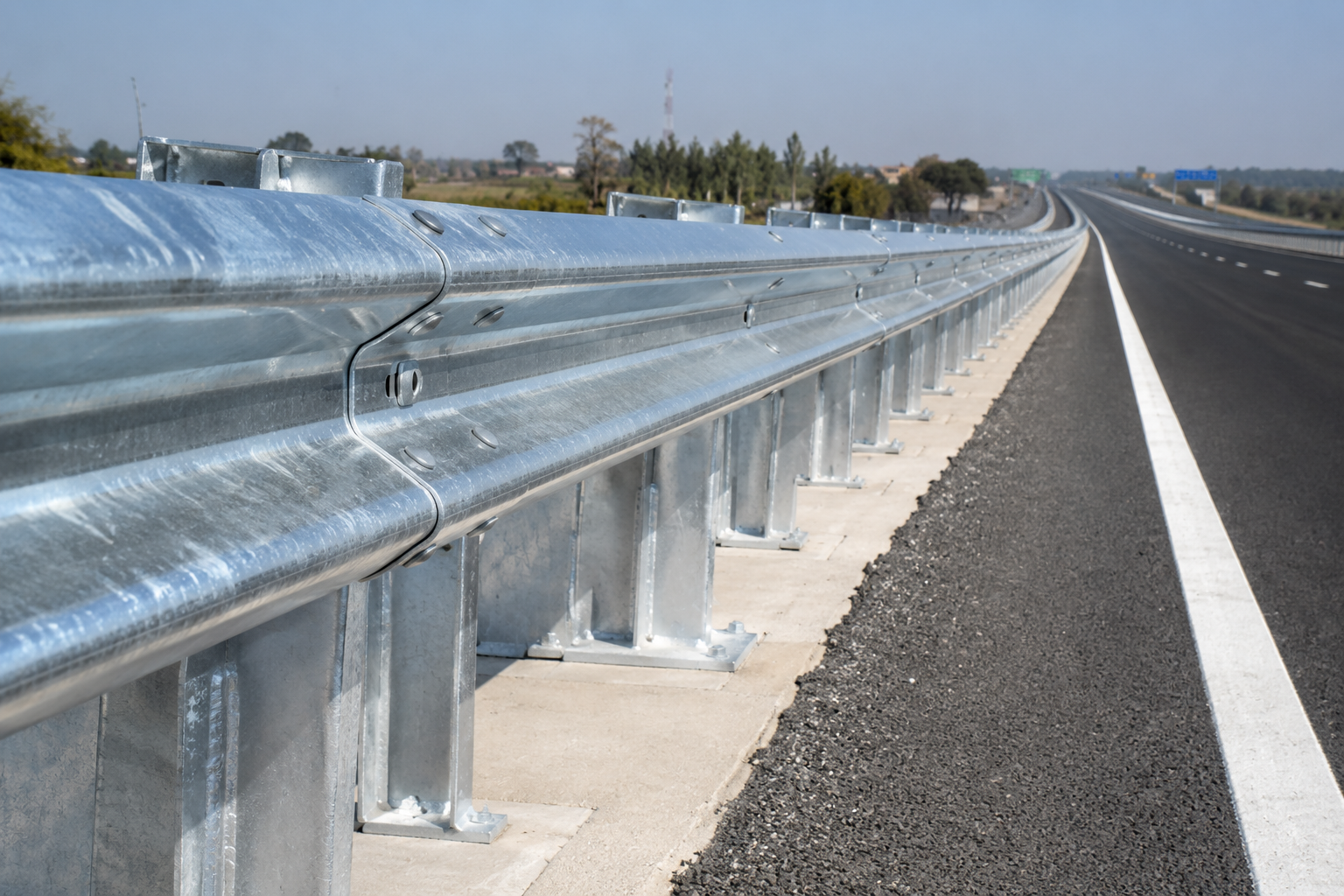
Road Safety & Highway Barriers
Highway Crash Barrier
Highway crash barrier systems designed and manufactured as per MORTH and IRC specifications for highways, expressways, bridges and medians. Available in W Beam and Thrie Beam configurations with hot-dip galvanised finish for maximum durability and road safety.
View productMBB-2613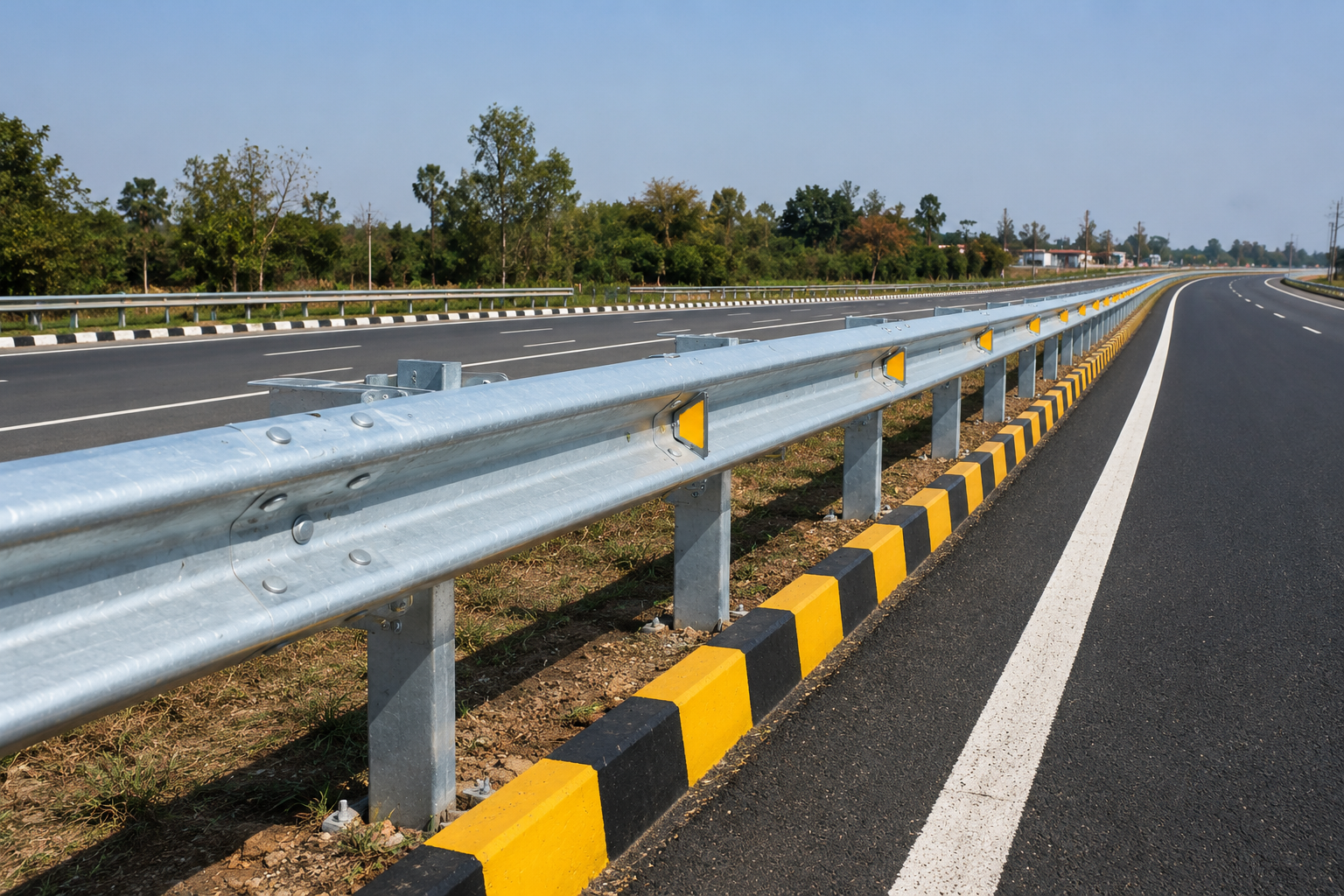
Road Safety & Highway Barriers
Highway Guardrail
Highway guardrail systems manufactured as per MORTH and IRC standards for highways, expressways, bridges and medians. Available in W Beam and Thrie Beam configurations with heavy-duty hot-dip galvanised coating for long-term corrosion protection.
View productMBB-2751
Road Safety & Highway Barriers
Metal Beam Crash Barrier
High-performance Metal Beam Crash Barriers manufactured to MoRTH Section 810 standards. Hot-dip galvanized for maximum durability and impact absorption on highways.
View productMore Guides
Related Guides & Comparisons reading
Guides & Comparisons · 2026-07-22
What Is MoRTH Clause 810? Metal Beam Crash Barrier Explained
A plain-English explanation of MoRTH Section 800 clause 810 — the clause that defines the metal beam crash barrier on Indian highways — and what it requires.
Read articleGuides & Comparisons · 2026-07-20
Crash Barrier Terminology: A MoRTH and IRC:119 Glossary
A quick-reference glossary of the crash barrier and guardrail terms used in MoRTH Section 800 and IRC:119 — from W-beam to working width, containment to spacer.
Read articleGuides & Comparisons · 2026-07-19
How to Choose the Right Crash Barrier: A MoRTH Decision Guide
A step-by-step decision guide for choosing the right crash barrier — W beam, Thrie beam or concrete — based on traffic, alignment, hazard and space, per MoRTH and IRC:119.
Read articleNeed this for a live project?
Talk to the Metal Beam Barriers desk for specifications, pricing and dispatch.