W Beam Crash Barrier · 2026-05-07
Common Reasons W Beam Crash Barriers Fail Site Inspection
The recurring reasons a W Beam crash barrier supply or installation gets rejected — and how to avoid each one before the inspector arrives.
Under-thickness rails. MoRTH specifies a 3 mm nominal rail (2.67 mm on some project specs). A rail below the specified thickness changes how the section absorbs energy and is a straightforward rejection. Mitigation: mill test certificates and, where required, sample thickness checks.
Low zinc coating mass. Hot-dip galvanising must meet a 550 g/m² minimum (IS 4759 / IS 2629). Low coating mass — common with under-galvanised or poorly controlled supply — fails inspection, especially in coastal and high-humidity corridors. Mitigation: coating-mass reports.
Short post embedment. Posts driven shallower than the design embedment (broadly 1.1–1.8 m for W beam in normal soil, ~1.6 m typical) pull out on impact and are a serious failure. Mitigation: verify driven depth against the drawing, drill-and-grout in rock rather than shortening.
Missing transitions at structures. A flexible run bolted straight to a rigid parapet without a designed transition is one of the most serious defects. Mitigation: order and install the correct transition pieces.
Wrong end terminals or bare rail ends. An untreated rail end is dangerous and non-compliant. Mitigation: approved fishtail, buried-in or crash-tested terminals at every run end.
Wrong splice/lap direction, height variation and bolt torque. Rails lapped against traffic flow, inconsistent top-of-rail height, or loose splice bolts are all common punch-list items. Mitigation: lap in the direction of traffic, set a uniform height (~700–760 mm), and torque to spec.
Metal Beam Barriers manufactures W Beam crash barriers to the correct rail thickness, coating mass and geometry, and supplies the material, coating and dimensional certificates that pre-empt these failures. Send your project for a factory-direct, documentation-complete quotation.
Related Products
The systems this guide covers
MBB-3515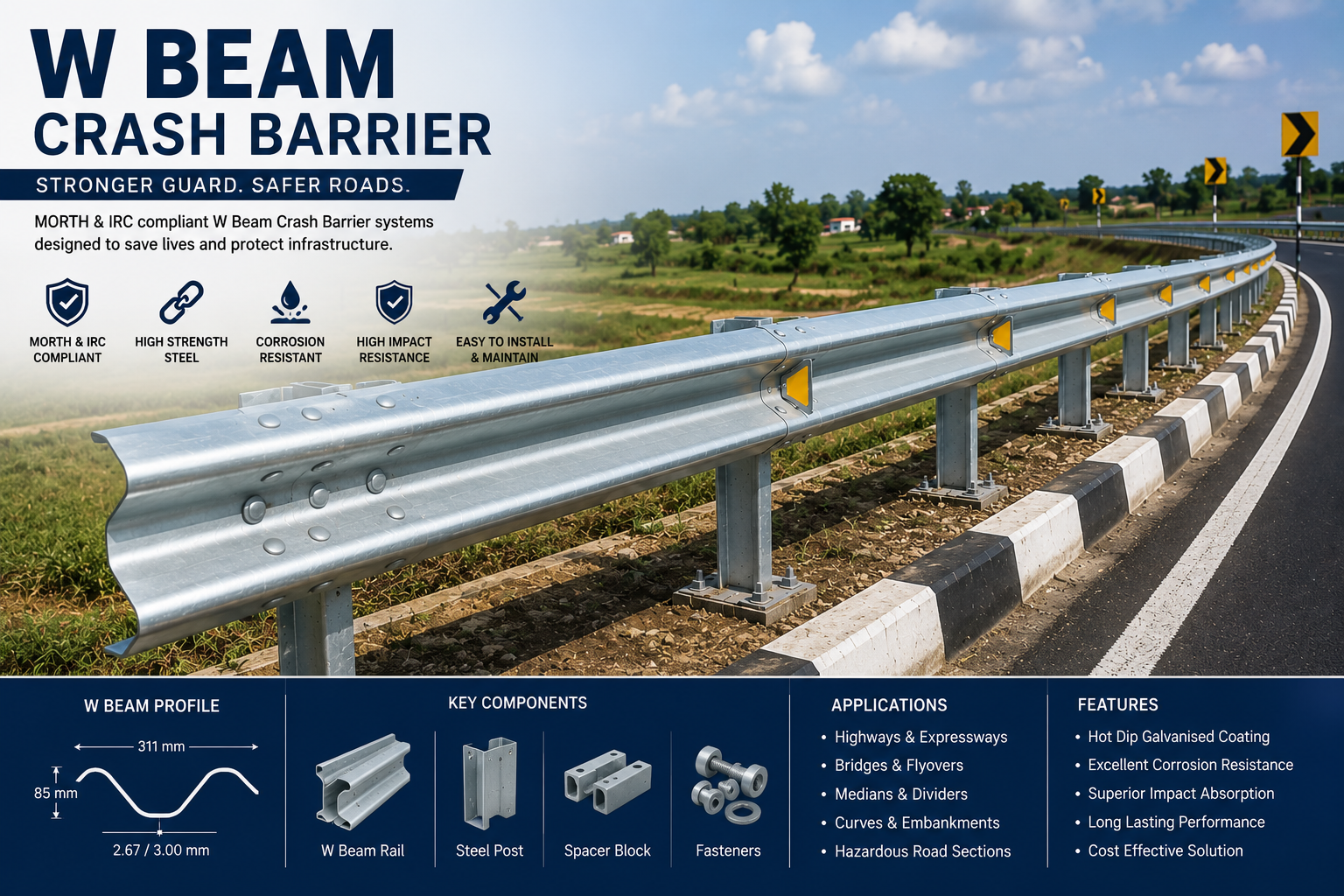
Road Safety & Highway Barriers
W Beam Crash Barrier
MORTH-compliant W beam crash barrier systems manufactured for highways, bridges, medians and expressways. Fabricated from high-strength steel with hot-dip galvanised coating for reliable vehicle containment and long service life.
View productMBB-5045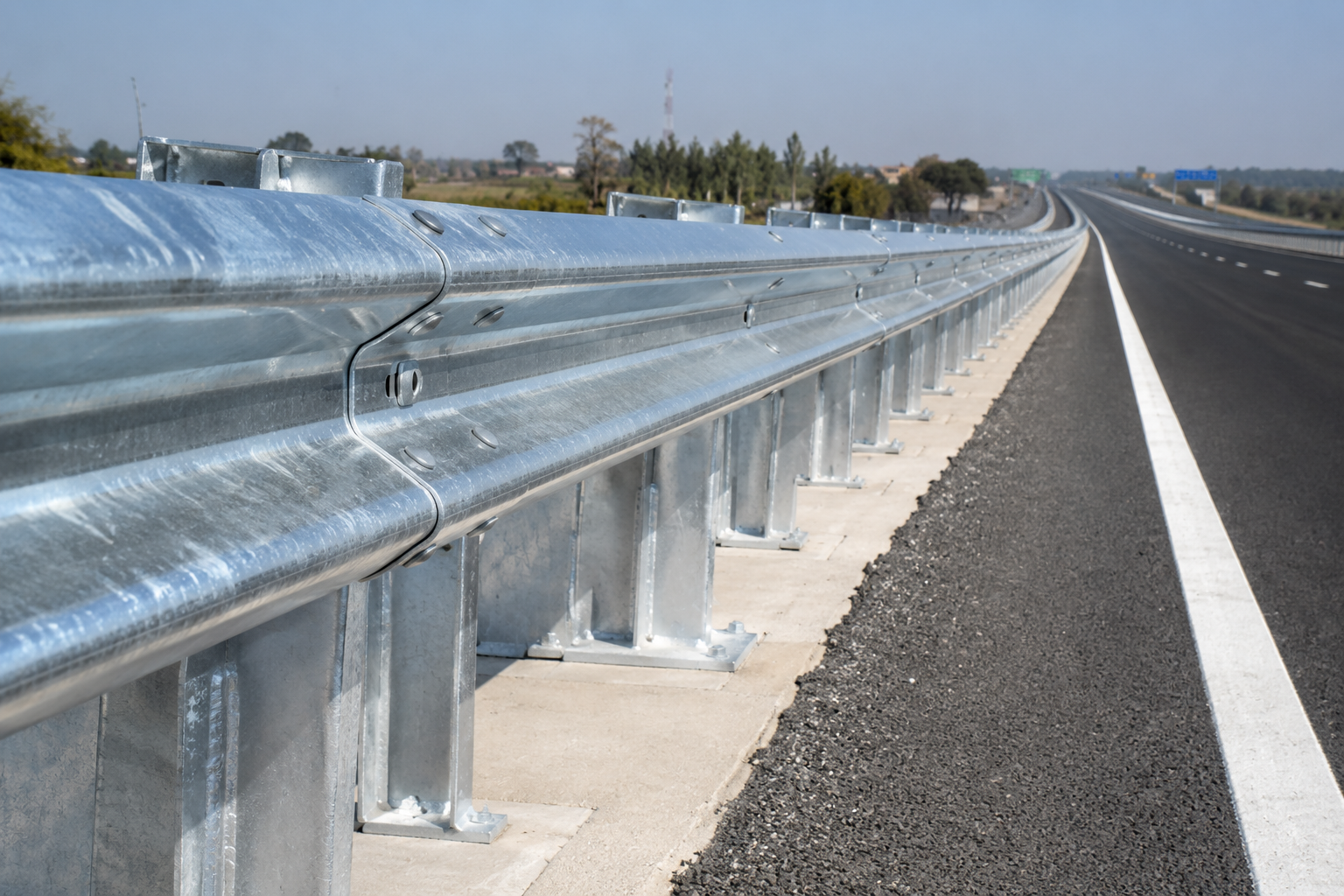
Road Safety & Highway Barriers
Highway Crash Barrier
Highway crash barrier systems designed and manufactured as per MORTH and IRC specifications for highways, expressways, bridges and medians. Available in W Beam and Thrie Beam configurations with hot-dip galvanised finish for maximum durability and road safety.
View productMBB-2613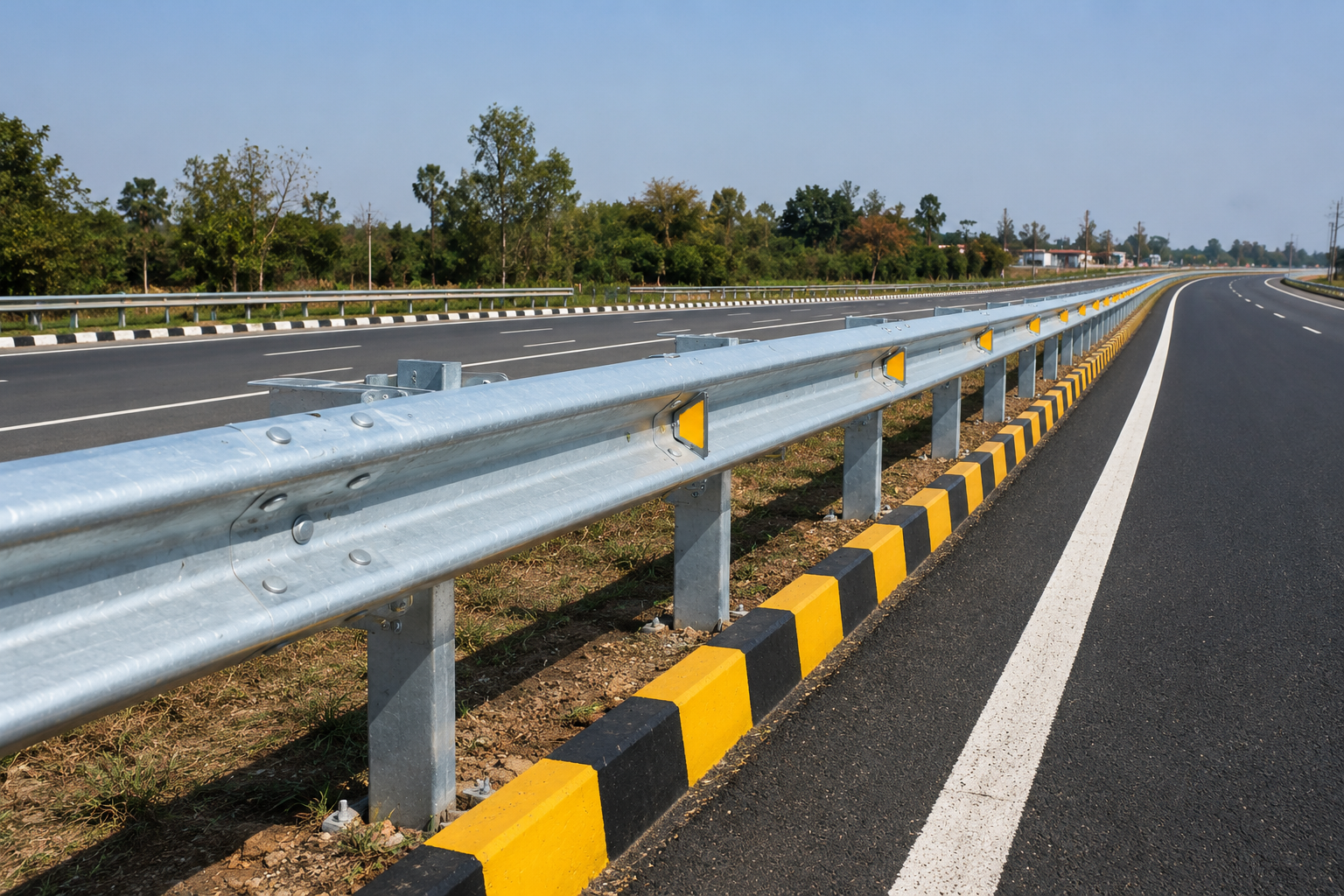
Road Safety & Highway Barriers
Highway Guardrail
Highway guardrail systems manufactured as per MORTH and IRC standards for highways, expressways, bridges and medians. Available in W Beam and Thrie Beam configurations with heavy-duty hot-dip galvanised coating for long-term corrosion protection.
View productMore Guides
Related W Beam Crash Barrier reading
W Beam Crash Barrier · 2026-07-18
W Beam Crash Barrier: Complete Guide to MoRTH Section 800
A complete guide to the W Beam crash barrier as specified under MoRTH Section 800 and IRC:119 — rail profile, posts, height, galvanising and how to procure a compliant system.
Read articleW Beam Crash Barrier · 2026-07-06
W Beam Crash Barrier Specifications as per IRC:119
A specification-level breakdown of the W Beam crash barrier under IRC:119 — profile, dimensions, containment, working width and impact severity.
Read articleW Beam Crash Barrier · 2026-06-24
W Beam Crash Barrier Installation Method Statement
A step-by-step installation sequence for W Beam crash barriers that satisfies MoRTH site inspection — setting out, post driving, rail mounting, terminals and QC.
Read articleNeed this for a live project?
Talk to the Metal Beam Barriers desk for specifications, pricing and dispatch.