Metal Beam Crash Barrier · 2026-06-09
Metal Beam Crash Barrier vs Concrete Barrier: Selection Guide
Flexible metal beam or rigid concrete? A practical comparison on containment, deflection, maintenance and cost to guide your MoRTH-compliant choice.
Deflection and working width. A metal beam barrier is flexible — it deflects on impact, absorbing energy and lowering the severity of the crash for occupants. That flexibility needs working width behind the line. A concrete barrier is rigid — it deflects almost nothing, so it suits locations with very little clear space behind, such as narrow medians and tight structures. The trade-off is that a rigid barrier can impose higher impact severity on occupants.
Containment. Both can be designed to high containment, but concrete reaches the very high levels (heavy articulated vehicles) more readily, which is why it appears on some high-consequence medians and bridge edges. A Thrie beam covers the higher metal-beam range.
Maintenance. A metal beam barrier is repairable: after a hit, the damaged rails and posts are replaced and the run is restored. A concrete barrier needs little routine maintenance but is harder to repair or relocate. Where access for repair is difficult, that changes the calculus.
Cost and logistics. Metal beam barriers are lighter, faster to install and easier to transport to remote or hill sites; concrete is heavier and often cast or placed on site.
A common real-world answer is a mix: metal beam along the open corridor, transitioning to rigid parapet at structures — with a proper transition between the two.
Metal Beam Barriers manufactures W beam, Thrie beam and metal beam crash barriers, including the transition pieces that connect a flexible run to a rigid parapet, to IRC:119 and MoRTH Section 800. Share your site constraints for guidance and a factory-direct quotation.
Related Products
The systems this guide covers
MBB-2751
Road Safety & Highway Barriers
Metal Beam Crash Barrier
High-performance Metal Beam Crash Barriers manufactured to MoRTH Section 810 standards. Hot-dip galvanized for maximum durability and impact absorption on highways.
View productMBB-5045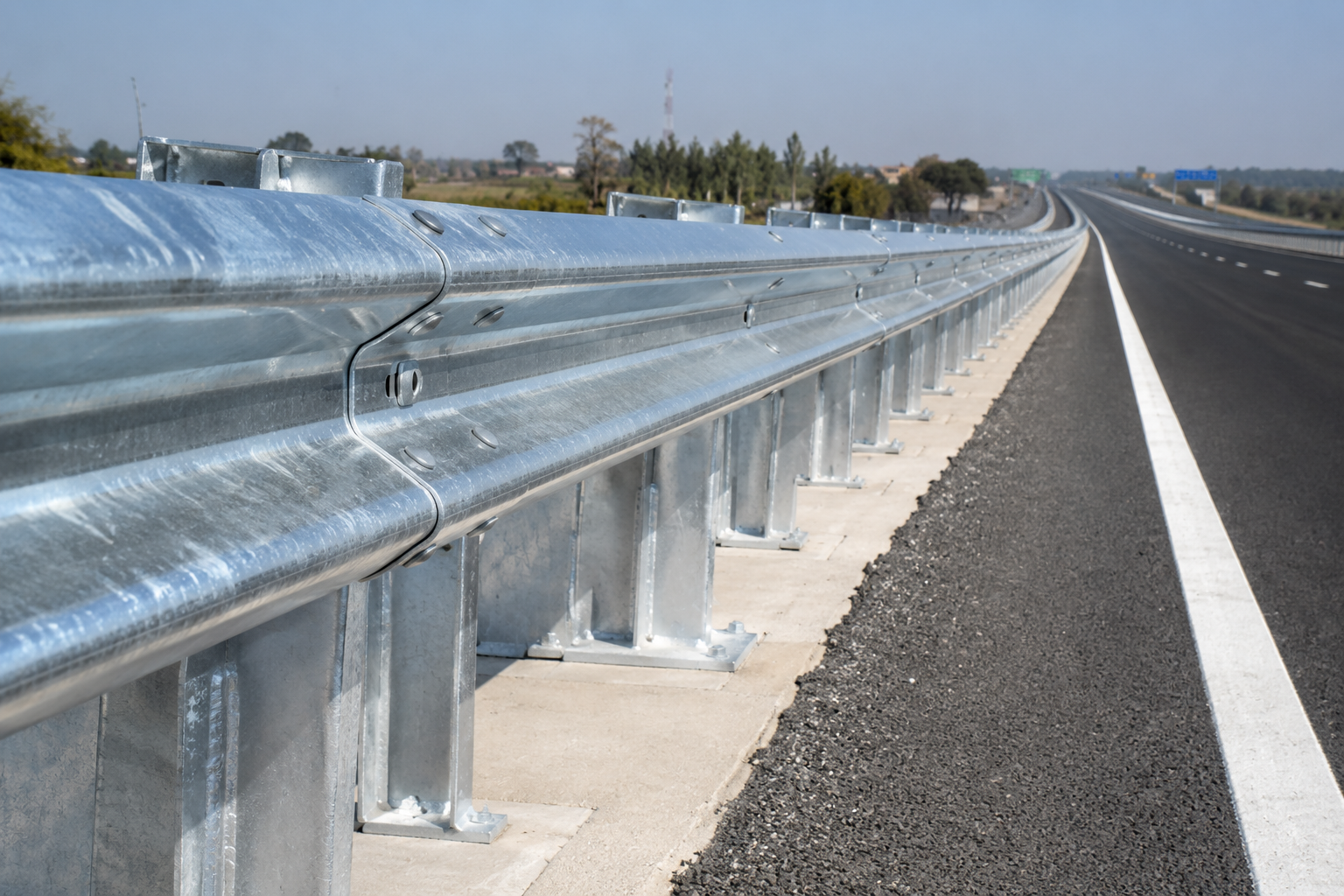
Road Safety & Highway Barriers
Highway Crash Barrier
Highway crash barrier systems designed and manufactured as per MORTH and IRC specifications for highways, expressways, bridges and medians. Available in W Beam and Thrie Beam configurations with hot-dip galvanised finish for maximum durability and road safety.
View productMBB-2613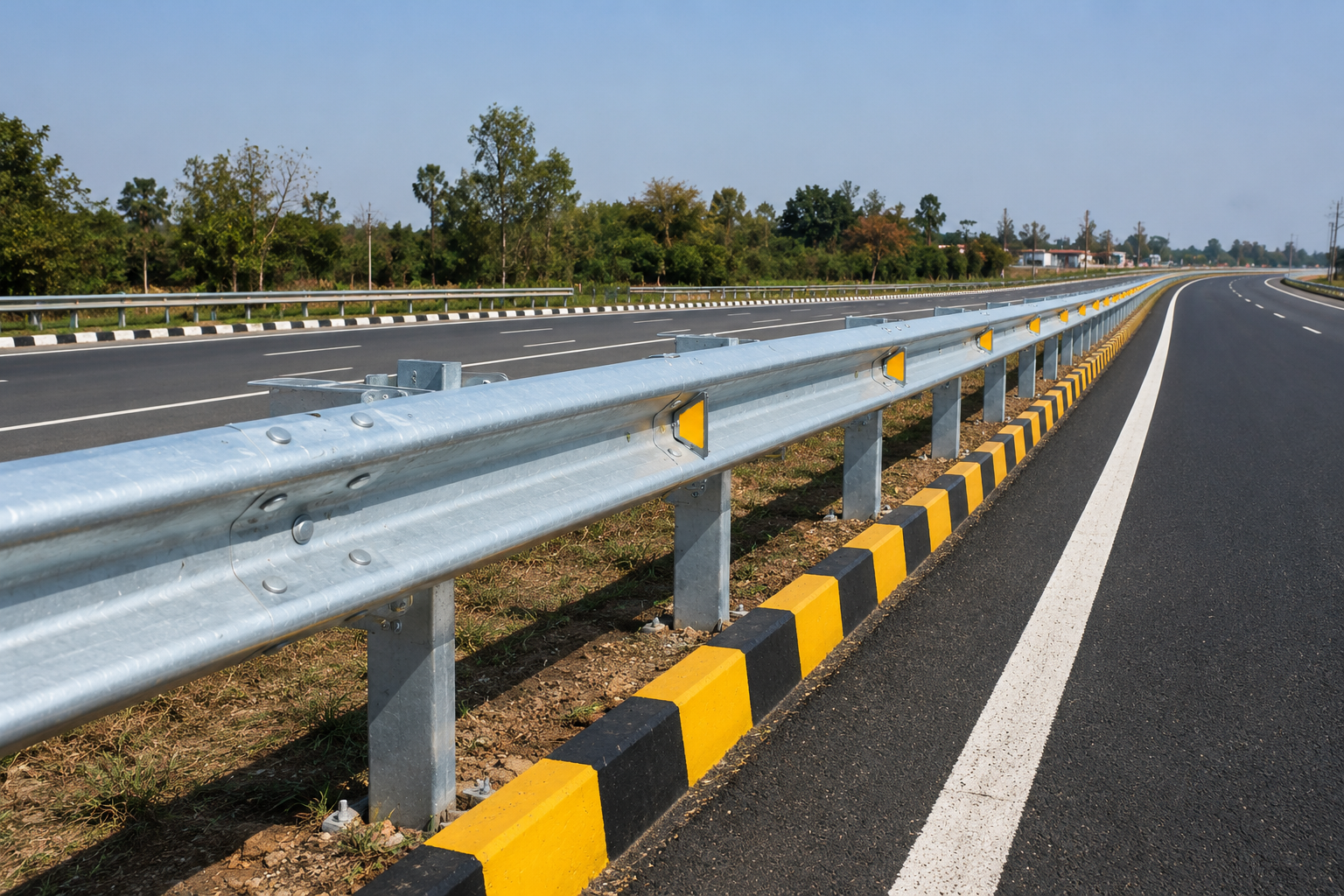
Road Safety & Highway Barriers
Highway Guardrail
Highway guardrail systems manufactured as per MORTH and IRC standards for highways, expressways, bridges and medians. Available in W Beam and Thrie Beam configurations with heavy-duty hot-dip galvanised coating for long-term corrosion protection.
View productMore Guides
Related Metal Beam Crash Barrier reading
Metal Beam Crash Barrier · 2026-07-15
Metal Beam Crash Barrier: MoRTH Clause 810 Requirements Explained
What MoRTH Section 800 clause 810 actually requires of a metal beam crash barrier — steel grade, rail thickness, post section, galvanising and finish.
Read articleMetal Beam Crash Barrier · 2026-07-03
Metal Beam Crash Barrier Steel Grade and Material: IS 2062
The steel behind a metal beam crash barrier matters as much as its shape. Here is what IS 2062 requires and why it appears on every mill test certificate.
Read articleMetal Beam Crash Barrier · 2026-06-21
Metal Beam Crash Barrier on Bridge Approaches and High Embankments
Bridge approaches and high embankments are where crash barriers matter most — and where transitions and containment must be got right per MoRTH and IRC:119.
Read articleNeed this for a live project?
Talk to the Metal Beam Barriers desk for specifications, pricing and dispatch.