Metal Beam Crash Barrier · 2026-06-21
Metal Beam Crash Barrier on Bridge Approaches and High Embankments
Bridge approaches and high embankments are where crash barriers matter most — and where transitions and containment must be got right per MoRTH and IRC:119.
At a high embankment, the consequence of a run-off crash rises with the fill height. MoRTH guidance calls for continuous edge protection where fill heights, roadside hazards or drops exist, and the containment level should reflect that consequence. A W Beam may suffice on a moderate embankment, but taller fills, sharp curves and heavy-vehicle corridors push the design toward a Thrie beam or reduced post spacing (down to 1 m).
Bridge approaches introduce a second problem: the flexible steel barrier must connect to the rigid concrete parapet of the structure without creating a snag point or a sudden stiffness change. This is handled with an approved transition — typically a nested or Thrie-beam transition that stiffens the barrier progressively as it nears the parapet, often with reduced post spacing and a rubrail. Getting this transition wrong — or omitting it — is one of the most common and most serious inspection failures.
Embedment and posts also change near structures. Where a post cannot achieve full embedment because of a culvert, wing wall or rock, a designed alternative (deeper section, grouted socket, or a surface-mounted base) must be used rather than simply shortening the post.
Throughout, the fundamentals hold: IS 2062 steel, 3 mm rail, hot-dip galvanising to 550 g/m², and reflectors per IRC:35 / IRC:79.
Metal Beam Barriers manufactures metal beam crash barriers with the full range of transition pieces for bridge approaches and the heavier sections for high embankments, all to IRC:119 and MoRTH Section 800. Send your structure and embankment details for a specification-matched quotation.
Related Products
The systems this guide covers
MBB-2751
Road Safety & Highway Barriers
Metal Beam Crash Barrier
High-performance Metal Beam Crash Barriers manufactured to MoRTH Section 810 standards. Hot-dip galvanized for maximum durability and impact absorption on highways.
View productMBB-5045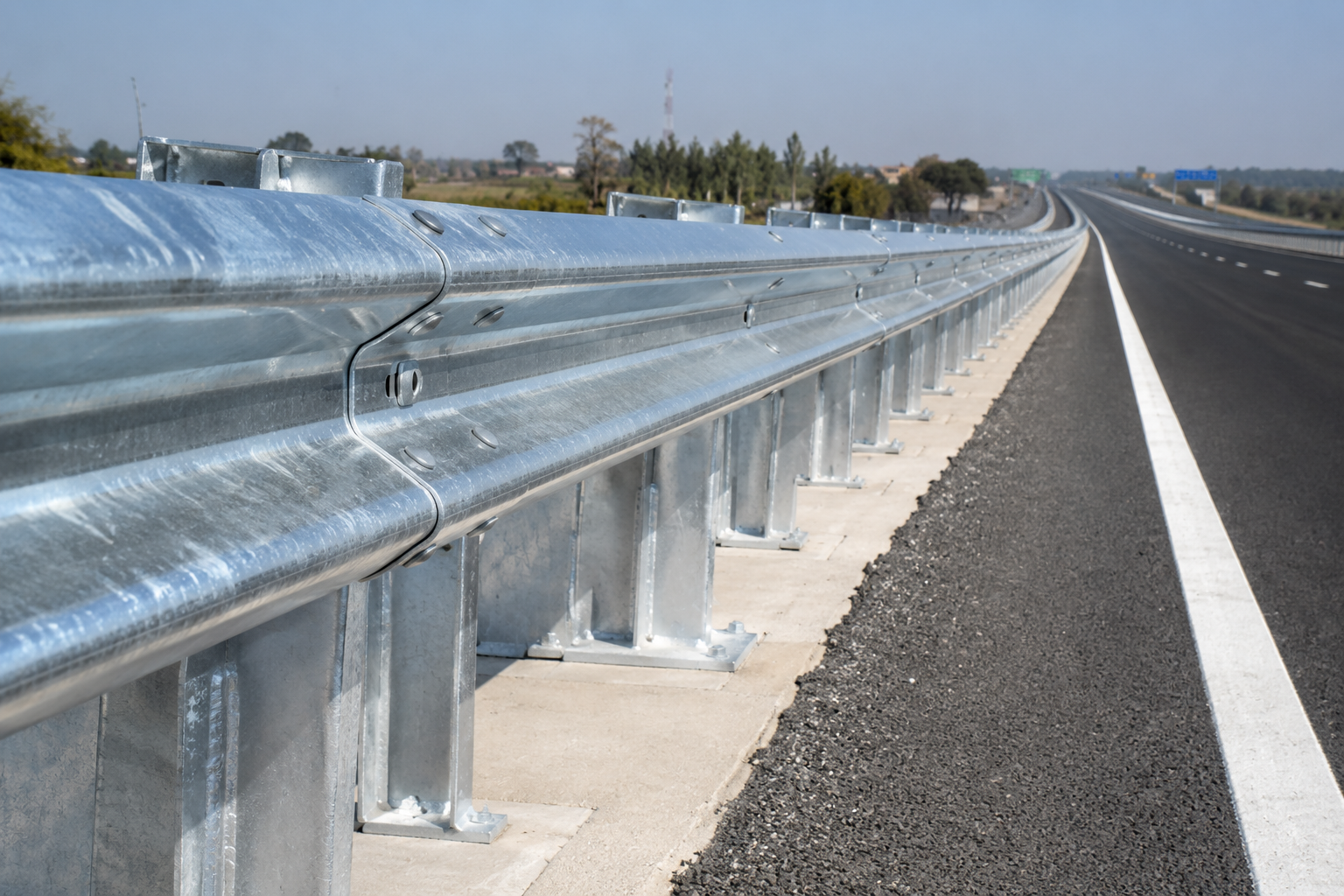
Road Safety & Highway Barriers
Highway Crash Barrier
Highway crash barrier systems designed and manufactured as per MORTH and IRC specifications for highways, expressways, bridges and medians. Available in W Beam and Thrie Beam configurations with hot-dip galvanised finish for maximum durability and road safety.
View productMBB-2613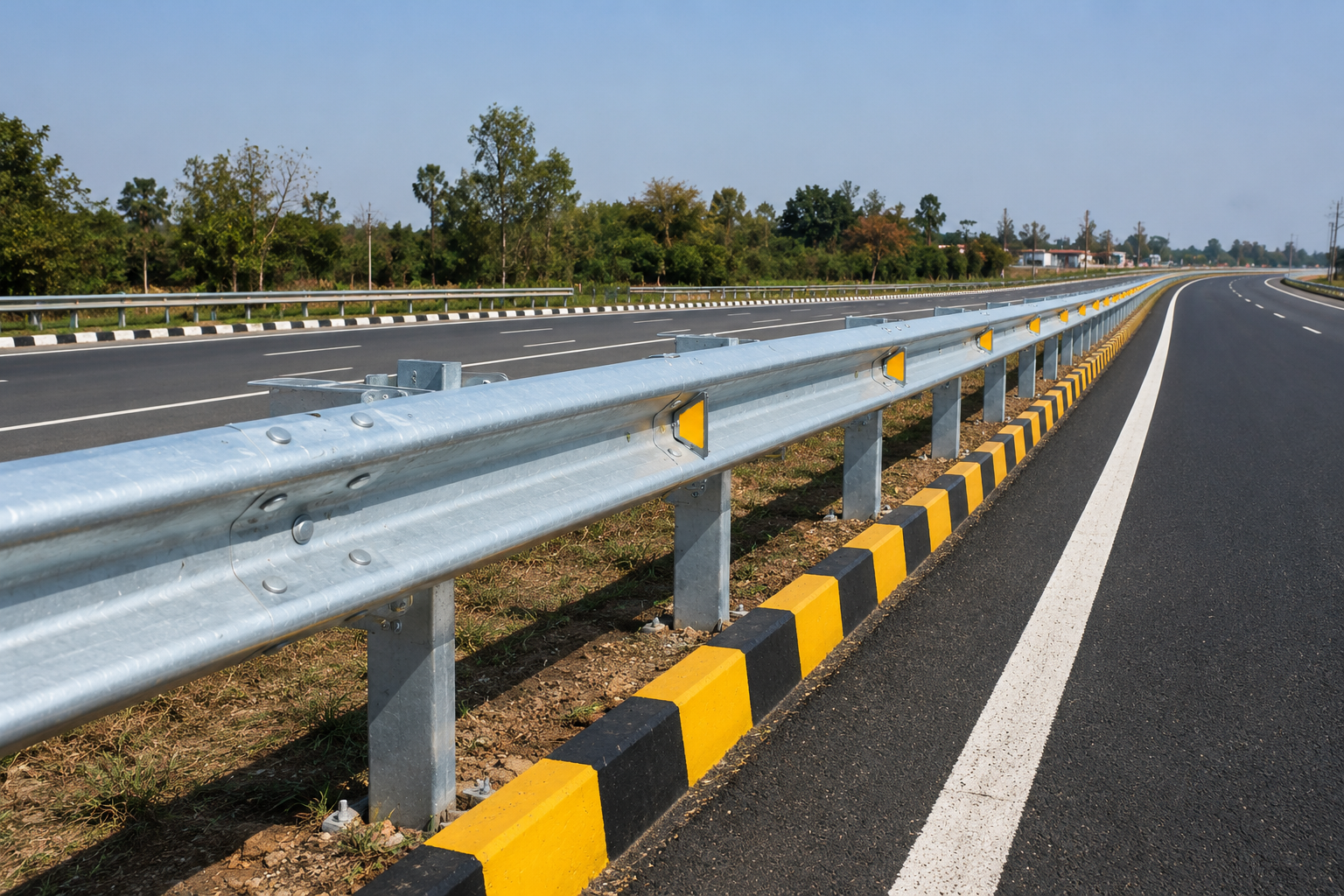
Road Safety & Highway Barriers
Highway Guardrail
Highway guardrail systems manufactured as per MORTH and IRC standards for highways, expressways, bridges and medians. Available in W Beam and Thrie Beam configurations with heavy-duty hot-dip galvanised coating for long-term corrosion protection.
View productMore Guides
Related Metal Beam Crash Barrier reading
Metal Beam Crash Barrier · 2026-07-15
Metal Beam Crash Barrier: MoRTH Clause 810 Requirements Explained
What MoRTH Section 800 clause 810 actually requires of a metal beam crash barrier — steel grade, rail thickness, post section, galvanising and finish.
Read articleMetal Beam Crash Barrier · 2026-07-03
Metal Beam Crash Barrier Steel Grade and Material: IS 2062
The steel behind a metal beam crash barrier matters as much as its shape. Here is what IS 2062 requires and why it appears on every mill test certificate.
Read articleMetal Beam Crash Barrier · 2026-06-09
Metal Beam Crash Barrier vs Concrete Barrier: Selection Guide
Flexible metal beam or rigid concrete? A practical comparison on containment, deflection, maintenance and cost to guide your MoRTH-compliant choice.
Read articleNeed this for a live project?
Talk to the Metal Beam Barriers desk for specifications, pricing and dispatch.