Metal Beam Crash Barrier · 2026-04-10
Metal Beam Crash Barrier Maintenance and Repair After Impact
A metal beam crash barrier only protects if it is maintained. Here is how damaged sections are inspected, repaired and restored to full function.
What to inspect for. Deformed or torn rails; bent, sheared or pulled-out posts; loosened or missing splice/post bolts; damaged or missing end terminals and transitions; corrosion or coating damage at cut/drilled points; and missing or degraded reflectors that reduce night guidance. Routine patrols and post-incident inspections both matter.
Repair logic. Because the barrier is modular, repair is component replacement: swap the damaged rail panels and posts, re-establish the correct lap direction, top-of-rail height (~700–760 mm) and bolt torque, and restore the run's continuity. Where a post socket or embedment is disturbed, re-drive or re-grout to design embedment rather than reusing a loosened post.
Coating and corrosion. Any field cutting or drilling exposes bare steel; treat it with an approved zinc-rich repair to restore the 550 g/m² protection at that point. In coastal and high-humidity corridors, watch for early coating breakdown at damage sites.
Reflectors. Replace damaged or dirty reflectors promptly — night visibility is part of the barrier's job.
Spares. Keeping a small stock of matching rails, posts and bolts lets a maintenance team restore a hit section quickly, before it exposes the next vehicle.
Because components are standardised, replacements must match the installed system's profile, thickness, post section and coating — mismatched parts compromise performance.
Metal Beam Barriers manufactures metal beam crash barrier components to consistent IRC:119 and MoRTH Section 800 geometry, so replacement rails, posts and fittings match your installed run. Tell us your installed profile and quantities for a factory-direct maintenance-spares quotation.
Related Products
The systems this guide covers
MBB-2751
Road Safety & Highway Barriers
Metal Beam Crash Barrier
High-performance Metal Beam Crash Barriers manufactured to MoRTH Section 810 standards. Hot-dip galvanized for maximum durability and impact absorption on highways.
View productMBB-5045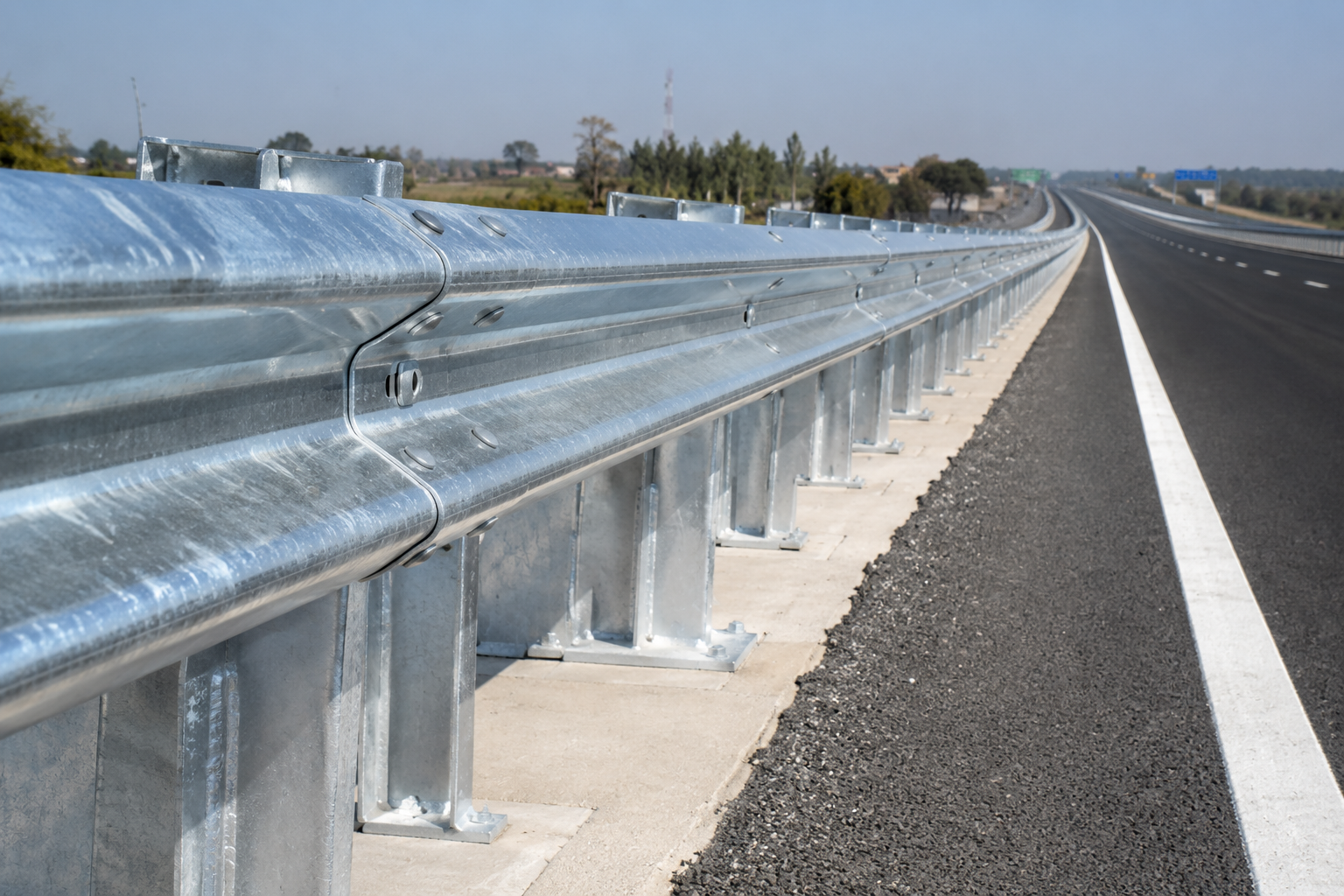
Road Safety & Highway Barriers
Highway Crash Barrier
Highway crash barrier systems designed and manufactured as per MORTH and IRC specifications for highways, expressways, bridges and medians. Available in W Beam and Thrie Beam configurations with hot-dip galvanised finish for maximum durability and road safety.
View productMBB-2613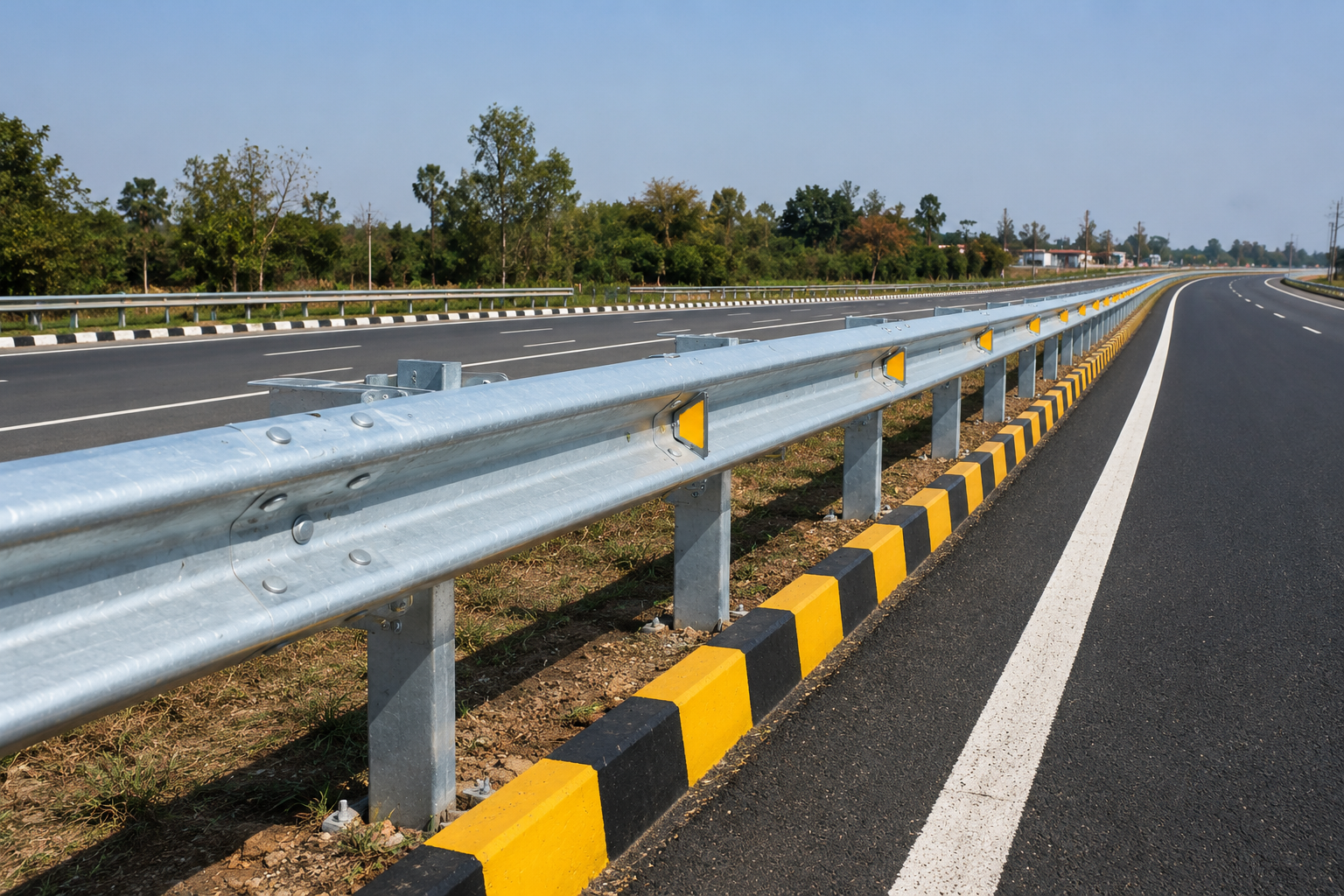
Road Safety & Highway Barriers
Highway Guardrail
Highway guardrail systems manufactured as per MORTH and IRC standards for highways, expressways, bridges and medians. Available in W Beam and Thrie Beam configurations with heavy-duty hot-dip galvanised coating for long-term corrosion protection.
View productMore Guides
Related Metal Beam Crash Barrier reading
Metal Beam Crash Barrier · 2026-07-15
Metal Beam Crash Barrier: MoRTH Clause 810 Requirements Explained
What MoRTH Section 800 clause 810 actually requires of a metal beam crash barrier — steel grade, rail thickness, post section, galvanising and finish.
Read articleMetal Beam Crash Barrier · 2026-07-03
Metal Beam Crash Barrier Steel Grade and Material: IS 2062
The steel behind a metal beam crash barrier matters as much as its shape. Here is what IS 2062 requires and why it appears on every mill test certificate.
Read articleMetal Beam Crash Barrier · 2026-06-21
Metal Beam Crash Barrier on Bridge Approaches and High Embankments
Bridge approaches and high embankments are where crash barriers matter most — and where transitions and containment must be got right per MoRTH and IRC:119.
Read articleNeed this for a live project?
Talk to the Metal Beam Barriers desk for specifications, pricing and dispatch.