Metal Beam Crash Barrier · 2026-05-28
Metal Beam Crash Barrier for Hill Roads and Ghats
Hill roads and ghats concentrate the highest crash consequences. Here is how metal beam crash barriers are specified for steep drops, tight curves and difficult access.
Containment and profile. On a straight plains road a W beam may suffice, but on a ghat with steep fall heights and heavy bus and truck traffic, the design usually calls for higher containment — a Thrie beam, or a W beam with reduced post spacing. IRC:119's containment framework (N1/N2 up to H1 and above) is the right language to specify this. The higher the drop and the heavier the traffic, the higher the containment.
Post spacing and embedment. Standard 2 m spacing is often reduced to 1 m through curves and above steep drops to cut deflection (working width), because there is little or no clear space behind the barrier. Embedment must be achieved in what is frequently rocky strata — which means drilling and grouting posts rather than shortening them.
Curves and continuity. Barriers on tight radii need careful setting-out so the rail follows the curve smoothly and presents a continuous face; gaps at culverts and cross-drainage need proper terminals or transitions, not open rail ends.
Environment. Hill and ghat corridors see high rainfall and, at altitude, freeze–thaw cycles — which makes the 550 g/m² hot-dip galvanised coating (IS 4759 / IS 2629) essential, not optional.
Logistics. Remote hill sites reward a barrier that is light and quick to install; metal beam systems ship and erect faster than rigid alternatives.
Metal Beam Barriers manufactures metal beam and Thrie beam crash barriers suited to hill-road and ghat conditions, galvanised to 550 g/m² and supplied with the terminals and transitions these alignments need. Send your alignment and drop details for a factory-direct quotation.
Related Products
The systems this guide covers
MBB-2751
Road Safety & Highway Barriers
Metal Beam Crash Barrier
High-performance Metal Beam Crash Barriers manufactured to MoRTH Section 810 standards. Hot-dip galvanized for maximum durability and impact absorption on highways.
View productMBB-5045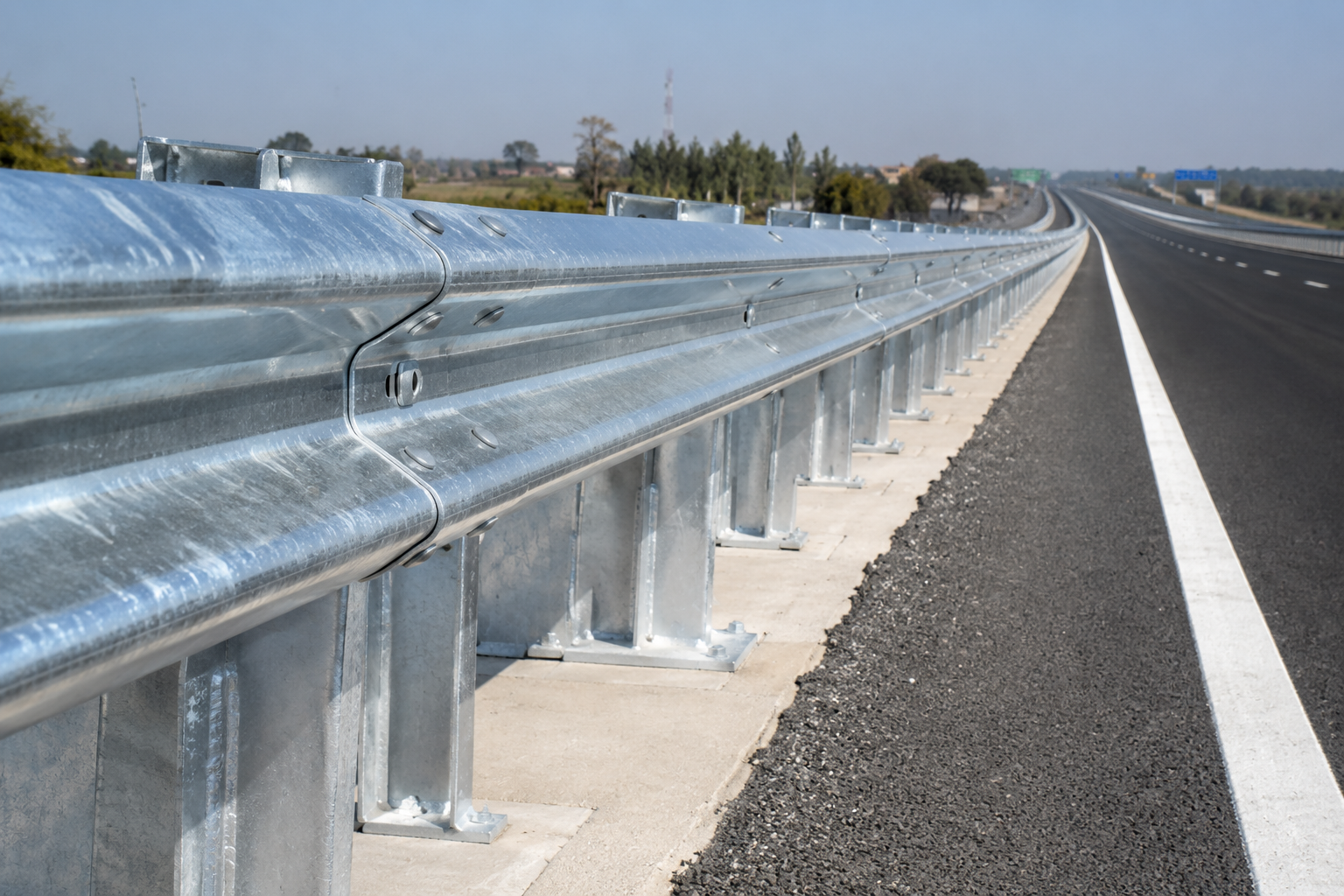
Road Safety & Highway Barriers
Highway Crash Barrier
Highway crash barrier systems designed and manufactured as per MORTH and IRC specifications for highways, expressways, bridges and medians. Available in W Beam and Thrie Beam configurations with hot-dip galvanised finish for maximum durability and road safety.
View productMBB-2613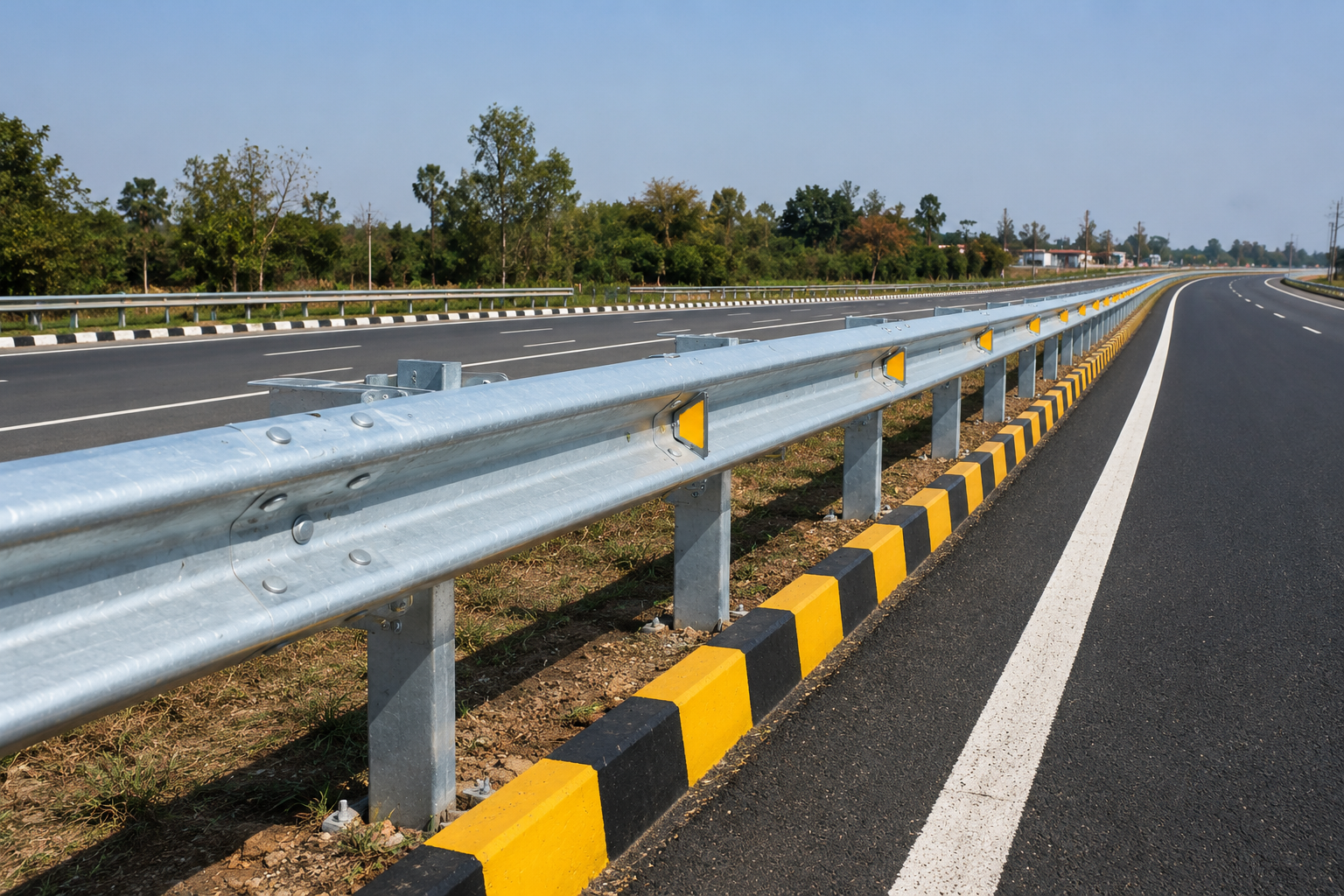
Road Safety & Highway Barriers
Highway Guardrail
Highway guardrail systems manufactured as per MORTH and IRC standards for highways, expressways, bridges and medians. Available in W Beam and Thrie Beam configurations with heavy-duty hot-dip galvanised coating for long-term corrosion protection.
View productMore Guides
Related Metal Beam Crash Barrier reading
Metal Beam Crash Barrier · 2026-07-15
Metal Beam Crash Barrier: MoRTH Clause 810 Requirements Explained
What MoRTH Section 800 clause 810 actually requires of a metal beam crash barrier — steel grade, rail thickness, post section, galvanising and finish.
Read articleMetal Beam Crash Barrier · 2026-07-03
Metal Beam Crash Barrier Steel Grade and Material: IS 2062
The steel behind a metal beam crash barrier matters as much as its shape. Here is what IS 2062 requires and why it appears on every mill test certificate.
Read articleMetal Beam Crash Barrier · 2026-06-21
Metal Beam Crash Barrier on Bridge Approaches and High Embankments
Bridge approaches and high embankments are where crash barriers matter most — and where transitions and containment must be got right per MoRTH and IRC:119.
Read articleNeed this for a live project?
Talk to the Metal Beam Barriers desk for specifications, pricing and dispatch.