Metal Beam Crash Barrier · 2026-05-04
Metal Beam Crash Barrier Height and Mounting per MoRTH
Mounting height is a make-or-break dimension for a metal beam crash barrier. Here is how it is set and why it is checked at every post.
Why height matters. The corrugated rail must present its full face at vehicle bumper height so that, on impact, the vehicle loads the rail and is redirected rather than overriding it (mounting too low) or underriding it (mounting too high). For a W beam, the top of the rail is generally held around 700–760 mm above the carriageway or paved shoulder; a Thrie beam follows the height set for its containment-level design.
What it is measured from. Height is referenced to the adjacent carriageway or paved-shoulder level, not to variable ground at the post — so on superelevated curves and varying shoulders, the installer must maintain the rail height relative to the driving surface, adjusting post height as needed.
Consistency. A run whose rail height wanders — because posts were driven to inconsistent levels — is a common inspection failure. The correct method sets a string line or level reference and keeps the top of rail uniform along the run, with a smooth vertical transition on grade changes.
Spacer/blocking piece. The spacer between post and rail is part of the height and offset geometry; it is not optional.
Interaction with embedment. Because height is set relative to the carriageway, posts are driven to the embedment that both anchors them and leaves the rail at the correct height — which is why post length and embedment are coordinated with height on the drawing.
Metal Beam Barriers manufactures metal beam crash barriers with matched posts and spacers so the specified mounting height is achievable on site, and supplies installation drawings that fix the height reference. Send your cross-section for a factory-direct quotation.
Related Products
The systems this guide covers
MBB-2751
Road Safety & Highway Barriers
Metal Beam Crash Barrier
High-performance Metal Beam Crash Barriers manufactured to MoRTH Section 810 standards. Hot-dip galvanized for maximum durability and impact absorption on highways.
View productMBB-5045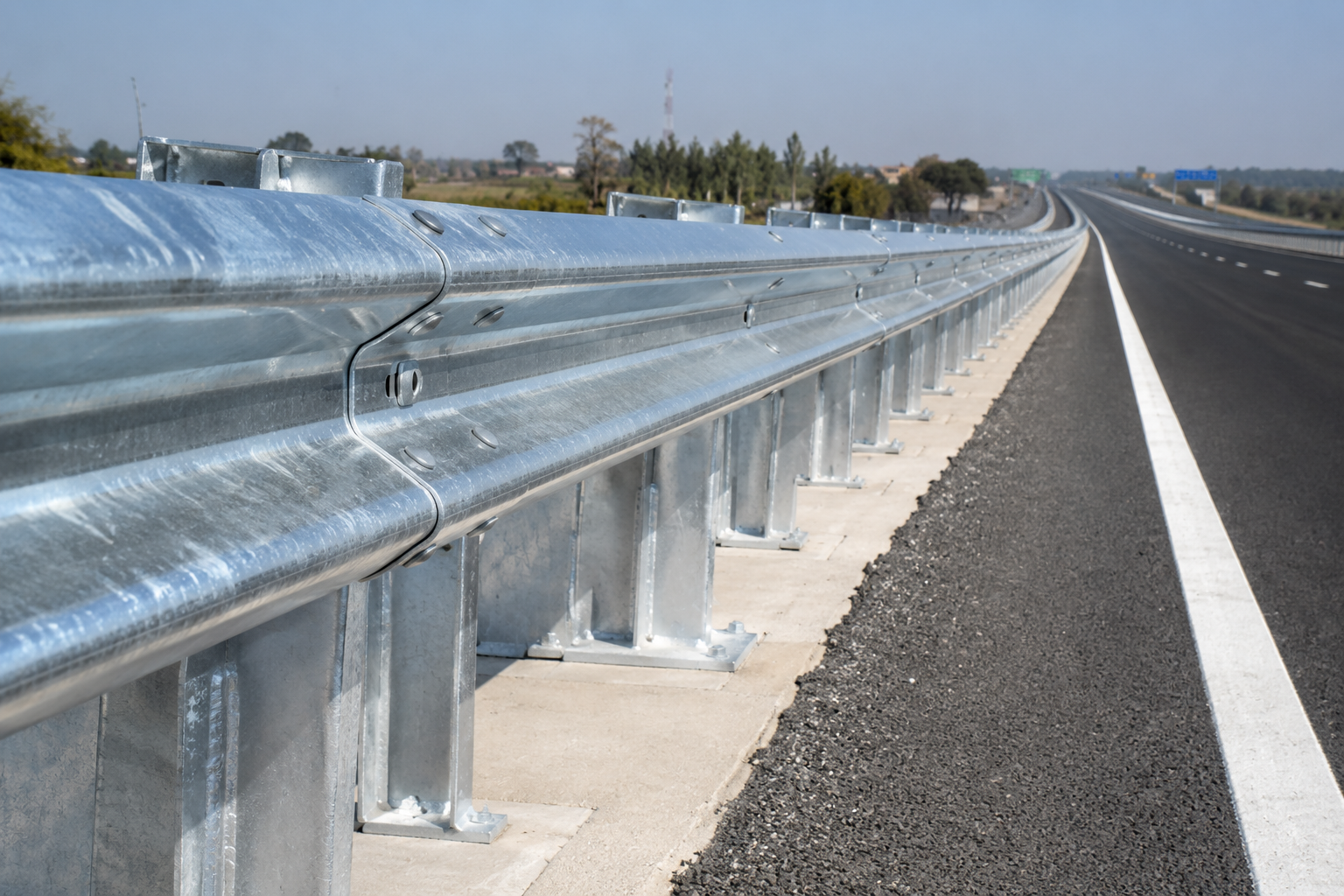
Road Safety & Highway Barriers
Highway Crash Barrier
Highway crash barrier systems designed and manufactured as per MORTH and IRC specifications for highways, expressways, bridges and medians. Available in W Beam and Thrie Beam configurations with hot-dip galvanised finish for maximum durability and road safety.
View productMBB-2613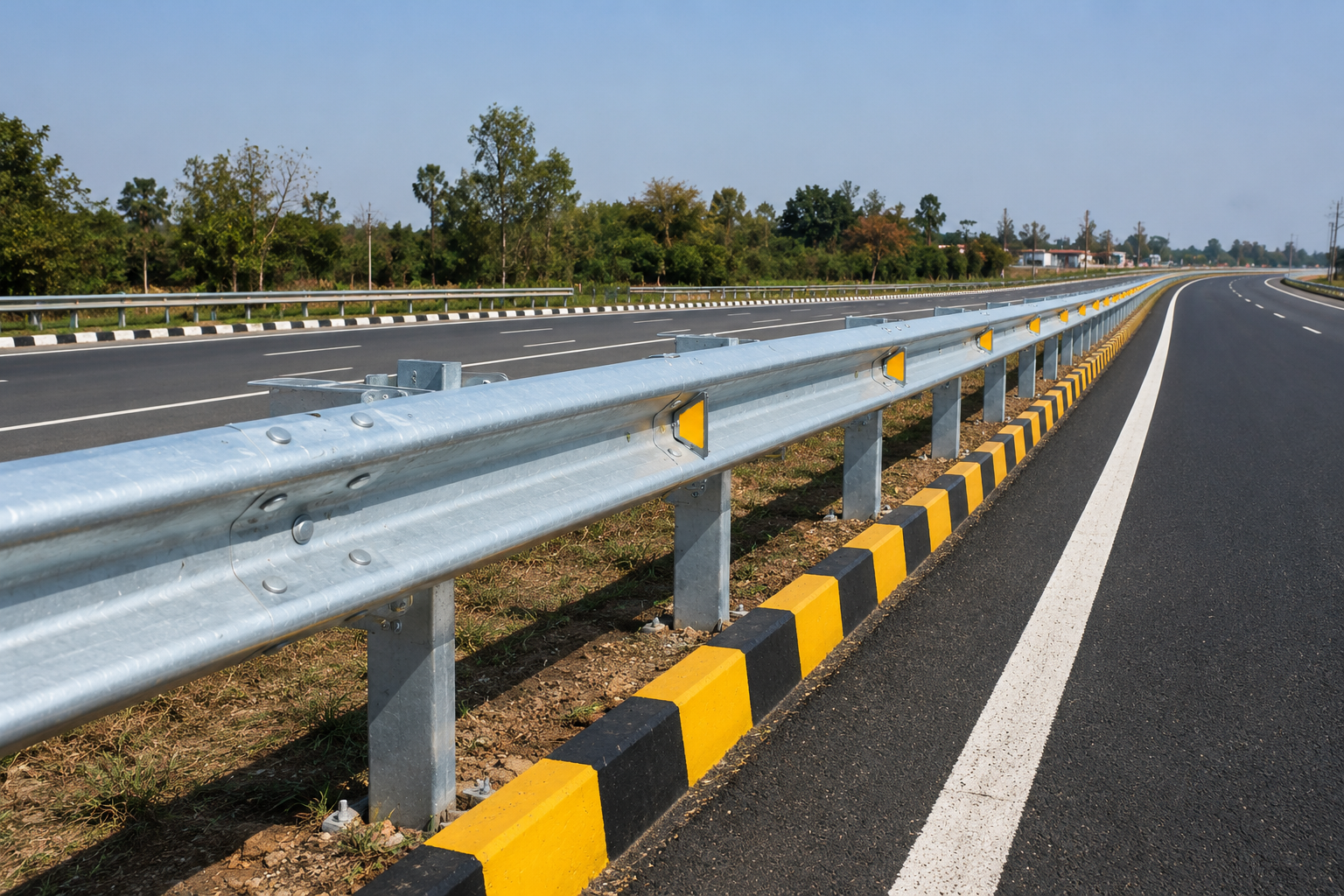
Road Safety & Highway Barriers
Highway Guardrail
Highway guardrail systems manufactured as per MORTH and IRC standards for highways, expressways, bridges and medians. Available in W Beam and Thrie Beam configurations with heavy-duty hot-dip galvanised coating for long-term corrosion protection.
View productMore Guides
Related Metal Beam Crash Barrier reading
Metal Beam Crash Barrier · 2026-07-15
Metal Beam Crash Barrier: MoRTH Clause 810 Requirements Explained
What MoRTH Section 800 clause 810 actually requires of a metal beam crash barrier — steel grade, rail thickness, post section, galvanising and finish.
Read articleMetal Beam Crash Barrier · 2026-07-03
Metal Beam Crash Barrier Steel Grade and Material: IS 2062
The steel behind a metal beam crash barrier matters as much as its shape. Here is what IS 2062 requires and why it appears on every mill test certificate.
Read articleMetal Beam Crash Barrier · 2026-06-21
Metal Beam Crash Barrier on Bridge Approaches and High Embankments
Bridge approaches and high embankments are where crash barriers matter most — and where transitions and containment must be got right per MoRTH and IRC:119.
Read articleNeed this for a live project?
Talk to the Metal Beam Barriers desk for specifications, pricing and dispatch.