Highway Guard Rail · 2026-05-22
Highway Guard Rail for Medians vs Roadside
Median and roadside guardrails do different jobs and are specified differently. Here is how MoRTH and IRC:119 treat each location.
Roadside (edge) guardrail. This shields traffic from roadside hazards — drops, embankments, fixed objects, water bodies, pedestrians. It is single-sided: it only needs to contain and redirect vehicles leaving the carriageway on that side. The rail faces the traffic; the working width must fit the clear space between the barrier and the hazard behind it. This is the most common guardrail installation on divided and undivided highways alike.
Median guardrail. On a divided carriageway, the median barrier's job is to prevent cross-over crashes — a vehicle crossing into oncoming traffic, one of the most fatal crash types. A median barrier is typically double-sided (it can be struck from either carriageway), so it is designed to contain and redirect impacts from both directions. Median location often carries higher consequences, which can justify higher containment (Thrie beam) or reduced post spacing, especially on high-speed corridors.
Shared fundamentals. Both use rail rolled from IS 2062 steel (3 mm, 2.67 mm on some specs) in 4.32 m panels; posts, commonly ISMC 150x75 channels, at 2 m centre-to-centre (1 m at hazards); a top-of-rail height around 700–760 mm; hot-dip galvanising to 550 g/m²; and reflectors per IRC:35 / IRC:79 (with median barriers often carrying reflectors visible to both carriageways).
The design driver in both cases is the same: match containment level and working width to the location's consequence and available space.
Metal Beam Barriers manufactures single- and double-sided highway guard rail systems for roadside and median use, to IRC:119 and MoRTH Section 800. Send your cross-section and median width for a factory-direct quotation.
Related Products
The systems this guide covers
MBB-5045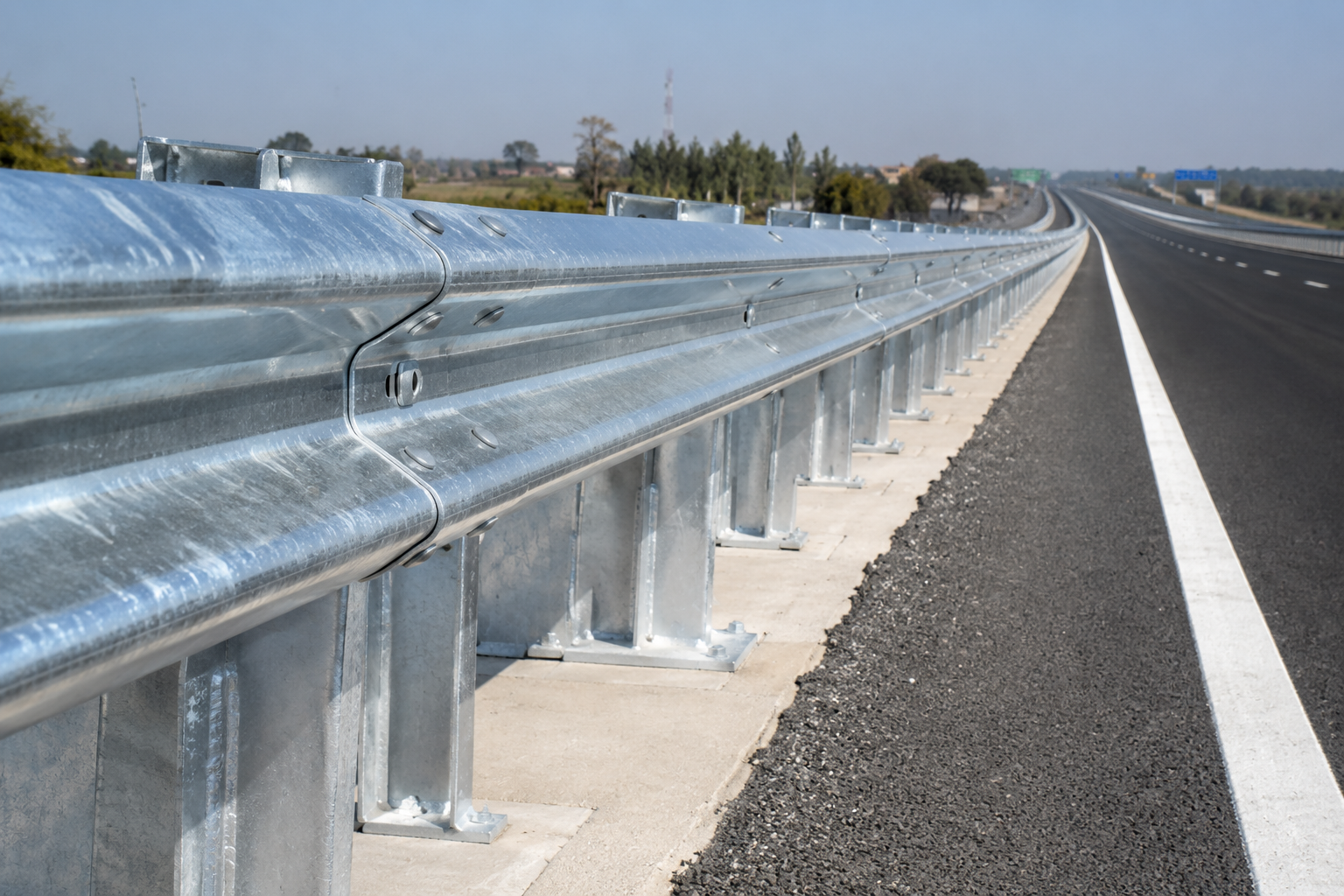
Road Safety & Highway Barriers
Highway Crash Barrier
Highway crash barrier systems designed and manufactured as per MORTH and IRC specifications for highways, expressways, bridges and medians. Available in W Beam and Thrie Beam configurations with hot-dip galvanised finish for maximum durability and road safety.
View productMBB-2613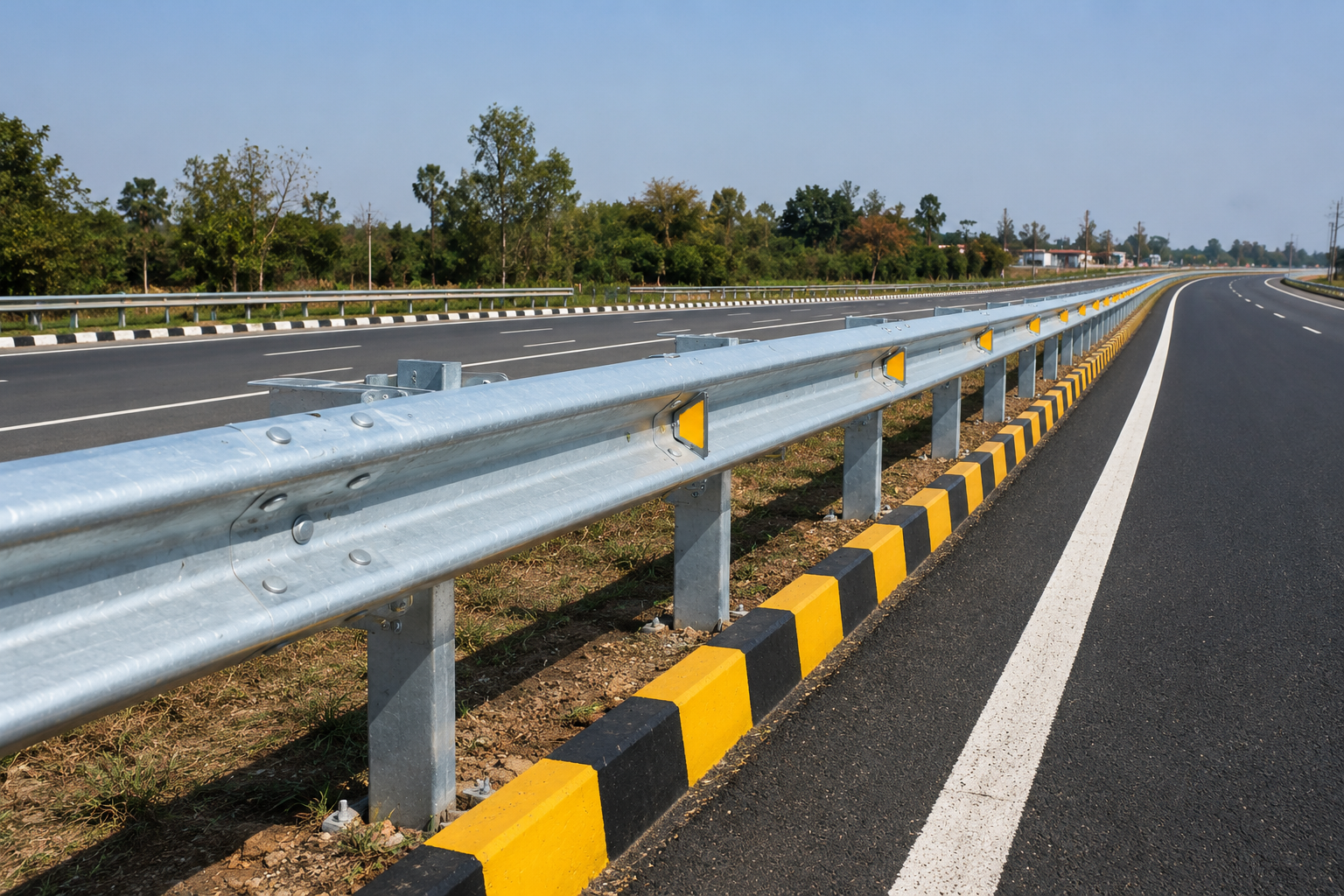
Road Safety & Highway Barriers
Highway Guardrail
Highway guardrail systems manufactured as per MORTH and IRC standards for highways, expressways, bridges and medians. Available in W Beam and Thrie Beam configurations with heavy-duty hot-dip galvanised coating for long-term corrosion protection.
View productMBB-2751
Road Safety & Highway Barriers
Metal Beam Crash Barrier
High-performance Metal Beam Crash Barriers manufactured to MoRTH Section 810 standards. Hot-dip galvanized for maximum durability and impact absorption on highways.
View productMore Guides
Related Highway Guard Rail reading
Highway Guard Rail · 2026-07-09
Highway Guard Rail: MoRTH and IRC:119 Overview for Buyers
Highway guard rail is the umbrella term for W and Thrie beam guardrail systems. Here is how MoRTH and IRC:119 define what a compliant guardrail must be.
Read articleHighway Guard Rail · 2026-06-27
Highway Guard Rail Types and Profiles: W Beam vs Thrie Beam
The two guardrail profiles used on Indian highways, and how to choose between them for edge, median and structure locations.
Read articleHighway Guard Rail · 2026-06-15
Highway Guard Rail Post Types: Channel vs Z-Section
The posts carry the guardrail's performance. Here is how channel and Z/C-section posts compare, and what MoRTH expects on spacing and embedment.
Read articleNeed this for a live project?
Talk to the Metal Beam Barriers desk for specifications, pricing and dispatch.