Highway Guard Rail · 2026-04-28
Highway Guard Rail Installation and Post Driving
The field sequence for installing a highway guard rail that passes inspection — from setting out to post driving, rail mounting and final checks.
Setting out. Mark post positions to the drawing spacing — 2 m centre-to-centre, reduced to 1 m at hazards, transitions and structures — and fix the offset from the carriageway edge. Identify and set out terminal and transition locations before driving any post.
Post driving. Drive the posts (commonly ISMC 150x75 channels for W beam, heavier sections for Thrie beam) to the design embedment with a hydraulic post driver. In rock, drill and grout to achieve equivalent fixity — never simply shorten the post. Check each post for plumb and for top level relative to the carriageway, because the rail height depends on it.
Rail mounting. Bolt the corrugated rails to the posts through the spacer/blocking pieces using galvanised bolts. Lap adjacent panels in the direction of traffic flow so the leading edge is smooth. Set the top of rail to the specified height (around 700–760 mm for W beam) and torque bolts to specification.
Terminals, transitions and reflectors. Install approved end terminals and any structure transitions, then fit reflectors/delineators at the specified spacing (per IRC:35 / IRC:79).
Final checks. Verify embedment, plumb, rail line and level, lap direction, bolt torque, coating integrity at any site-drilled points (touch up with zinc-rich repair), terminal and transition completeness, and reflector spacing.
Material behind the method: IS 2062 steel rail and posts, 3 mm rail, hot-dip galvanising to 550 g/m².
Metal Beam Barriers supplies highway guard rail systems with installation drawings and field-coordination support, plus the material and coating certificates your inspector needs. Send your project length and destination for a factory-direct quotation.
Related Products
The systems this guide covers
MBB-5045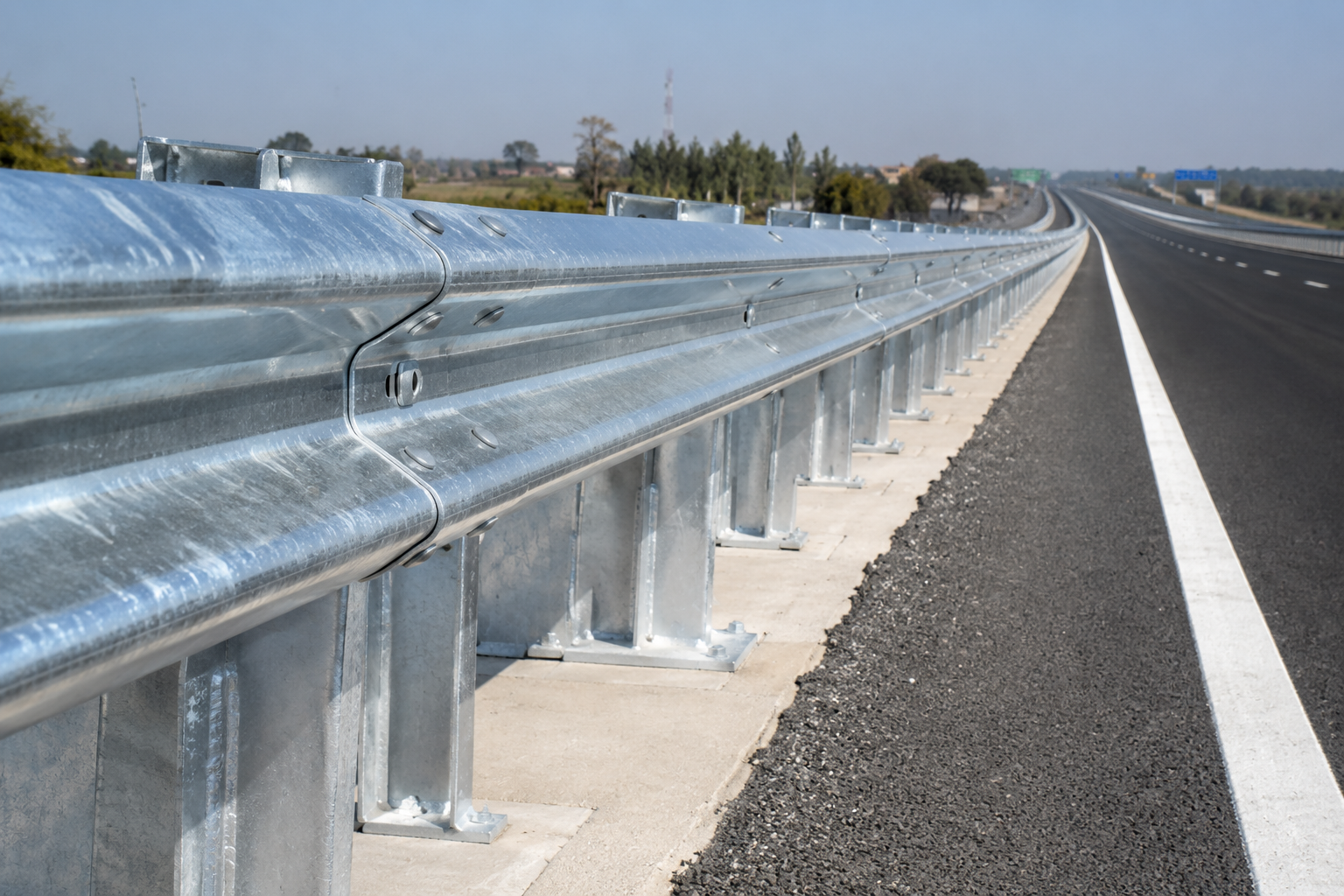
Road Safety & Highway Barriers
Highway Crash Barrier
Highway crash barrier systems designed and manufactured as per MORTH and IRC specifications for highways, expressways, bridges and medians. Available in W Beam and Thrie Beam configurations with hot-dip galvanised finish for maximum durability and road safety.
View productMBB-2613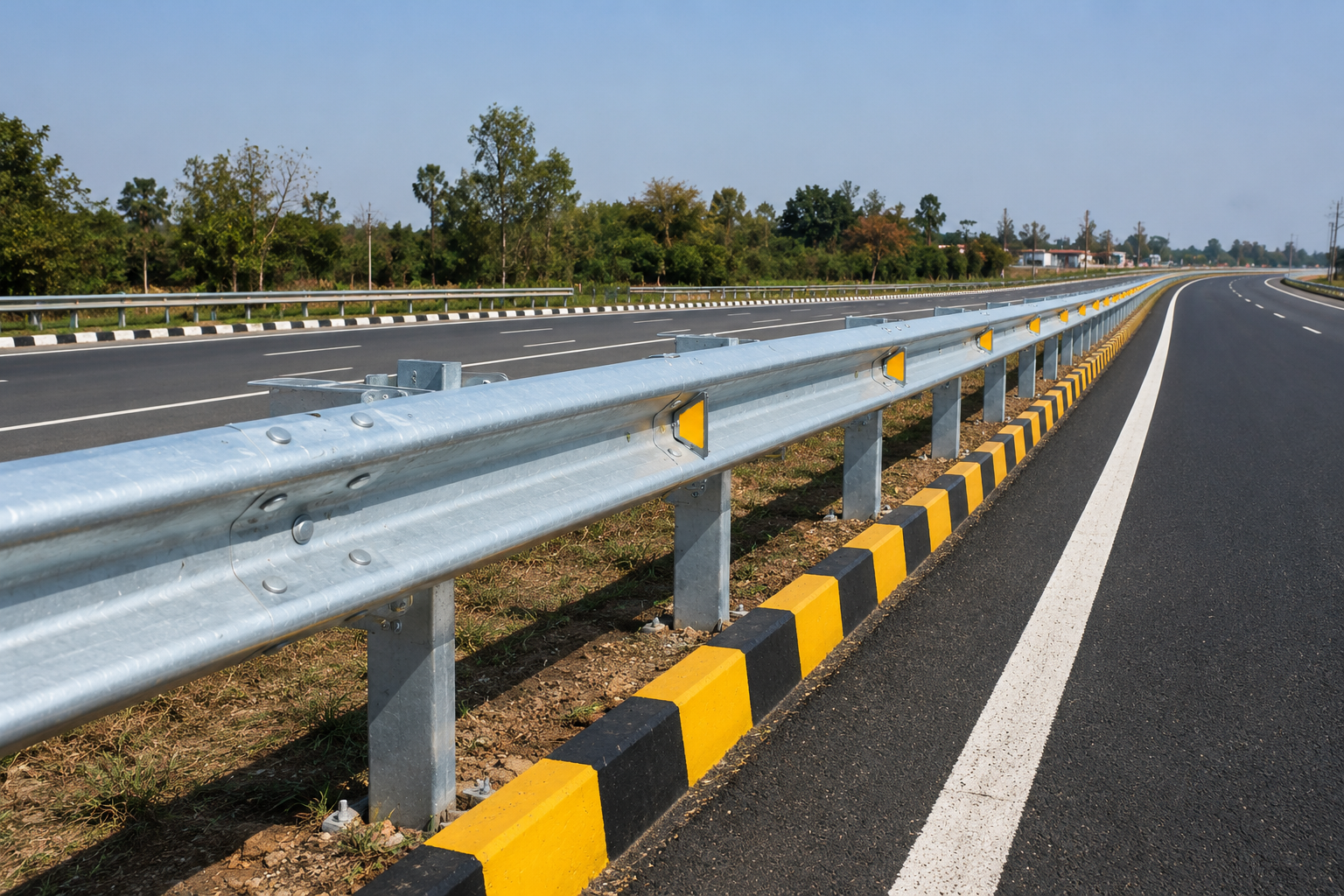
Road Safety & Highway Barriers
Highway Guardrail
Highway guardrail systems manufactured as per MORTH and IRC standards for highways, expressways, bridges and medians. Available in W Beam and Thrie Beam configurations with heavy-duty hot-dip galvanised coating for long-term corrosion protection.
View productMBB-2751
Road Safety & Highway Barriers
Metal Beam Crash Barrier
High-performance Metal Beam Crash Barriers manufactured to MoRTH Section 810 standards. Hot-dip galvanized for maximum durability and impact absorption on highways.
View productMore Guides
Related Highway Guard Rail reading
Highway Guard Rail · 2026-07-09
Highway Guard Rail: MoRTH and IRC:119 Overview for Buyers
Highway guard rail is the umbrella term for W and Thrie beam guardrail systems. Here is how MoRTH and IRC:119 define what a compliant guardrail must be.
Read articleHighway Guard Rail · 2026-06-27
Highway Guard Rail Types and Profiles: W Beam vs Thrie Beam
The two guardrail profiles used on Indian highways, and how to choose between them for edge, median and structure locations.
Read articleHighway Guard Rail · 2026-06-15
Highway Guard Rail Post Types: Channel vs Z-Section
The posts carry the guardrail's performance. Here is how channel and Z/C-section posts compare, and what MoRTH expects on spacing and embedment.
Read articleNeed this for a live project?
Talk to the Metal Beam Barriers desk for specifications, pricing and dispatch.