Highway Guard Rail · 2026-06-03
Highway Guard Rail Height and Deflection (Working Width)
Two dimensions decide whether a guardrail works: its mounting height and its deflection (working width). Here is how MoRTH and IRC:119 treat both.
Height. The rail must present its full corrugated face to an impacting vehicle at bumper height. For a W beam, the top of the rail is generally held around 700–760 mm above the carriageway or paved shoulder; a Thrie beam, with its deeper section, follows the height set by its containment-level design. If the rail is mounted too low, a vehicle can override it; too high, and a small car can underride. Consistent height along the run — checked at every post — is a basic inspection item.
Deflection and working width. A flexible guardrail is meant to deflect on impact — that deflection is how it absorbs energy and softens the crash. IRC:119 quantifies it as working width, classified W1 (up to 0.6 m) to W8 (up to 3.5 m): the total lateral distance the system may occupy at peak impact. The design lesson is spatial: you must have at least the working width of clear space behind the barrier line, or a deflecting rail (and the vehicle behind it) can still reach the very hazard the barrier was installed to shield.
How to control deflection. Reduce post spacing (2 m down to 1 m), choose a stiffer profile (Thrie beam), or increase embedment — each lowers working width where clear space is tight.
Everything sits on the standard build: IS 2062 steel, 3 mm rail, hot-dip galvanising to 550 g/m², reflectors per IRC:35 / IRC:79.
Metal Beam Barriers manufactures highway guard rail systems and can advise the post spacing and profile that meet both your height and working-width constraints. Send your cross-section for a factory-direct quotation.
Related Products
The systems this guide covers
MBB-5045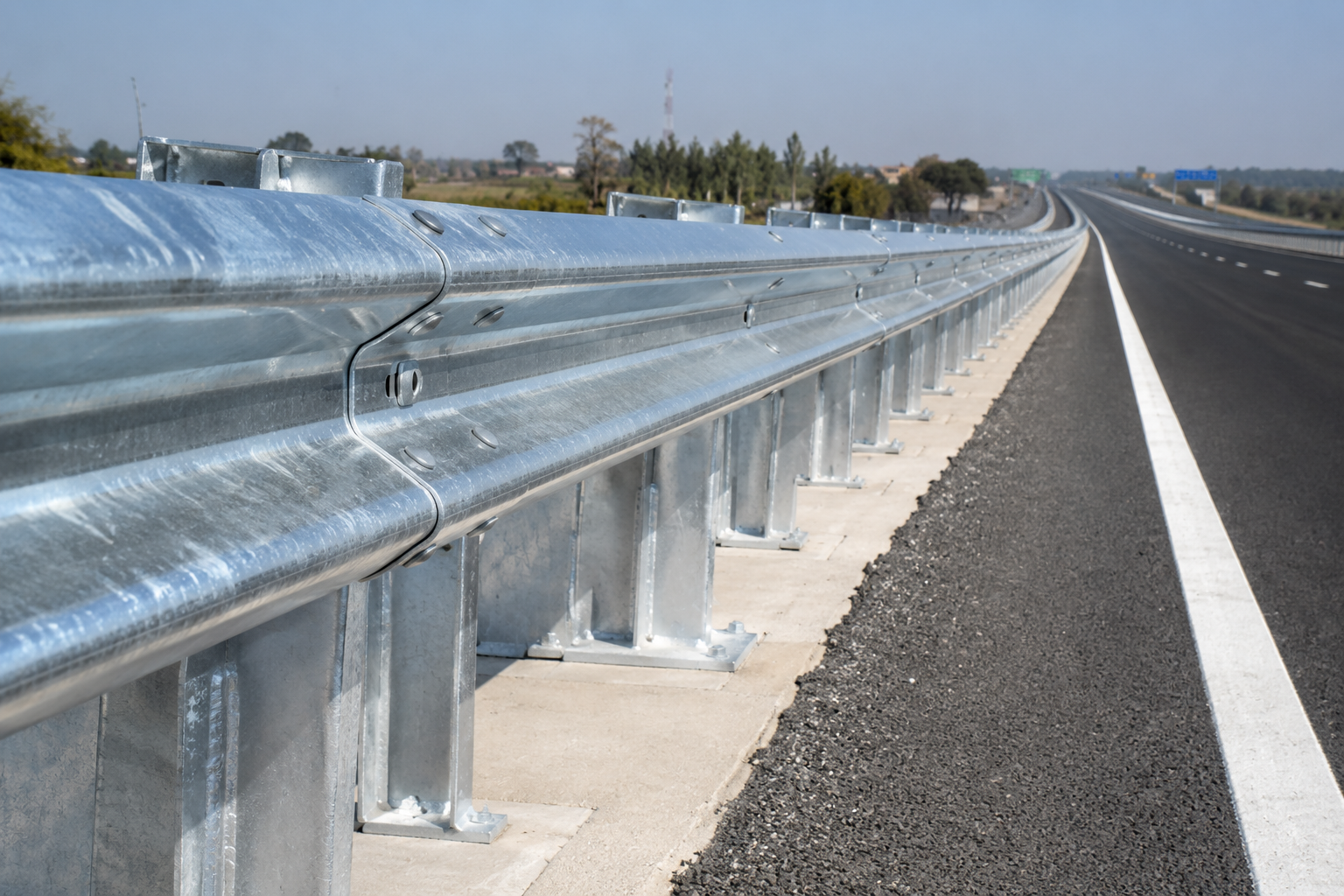
Road Safety & Highway Barriers
Highway Crash Barrier
Highway crash barrier systems designed and manufactured as per MORTH and IRC specifications for highways, expressways, bridges and medians. Available in W Beam and Thrie Beam configurations with hot-dip galvanised finish for maximum durability and road safety.
View productMBB-2613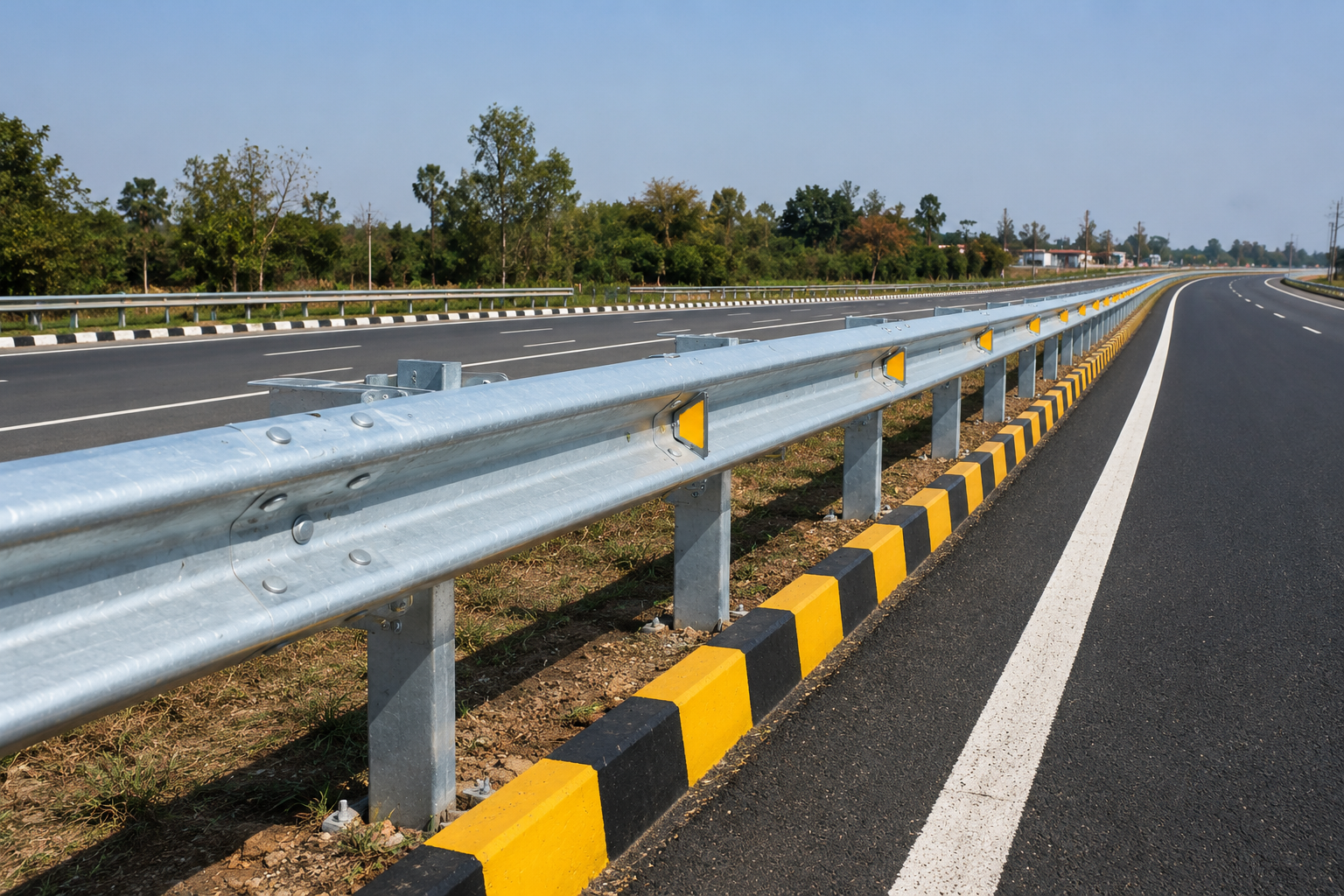
Road Safety & Highway Barriers
Highway Guardrail
Highway guardrail systems manufactured as per MORTH and IRC standards for highways, expressways, bridges and medians. Available in W Beam and Thrie Beam configurations with heavy-duty hot-dip galvanised coating for long-term corrosion protection.
View productMBB-2751
Road Safety & Highway Barriers
Metal Beam Crash Barrier
High-performance Metal Beam Crash Barriers manufactured to MoRTH Section 810 standards. Hot-dip galvanized for maximum durability and impact absorption on highways.
View productMore Guides
Related Highway Guard Rail reading
Highway Guard Rail · 2026-07-09
Highway Guard Rail: MoRTH and IRC:119 Overview for Buyers
Highway guard rail is the umbrella term for W and Thrie beam guardrail systems. Here is how MoRTH and IRC:119 define what a compliant guardrail must be.
Read articleHighway Guard Rail · 2026-06-27
Highway Guard Rail Types and Profiles: W Beam vs Thrie Beam
The two guardrail profiles used on Indian highways, and how to choose between them for edge, median and structure locations.
Read articleHighway Guard Rail · 2026-06-15
Highway Guard Rail Post Types: Channel vs Z-Section
The posts carry the guardrail's performance. Here is how channel and Z/C-section posts compare, and what MoRTH expects on spacing and embedment.
Read articleNeed this for a live project?
Talk to the Metal Beam Barriers desk for specifications, pricing and dispatch.