Thrie Beam Crash Barrier · 2026-05-01
Thrie Beam vs W Beam: Cost and Performance Comparison
The Thrie beam costs more per metre than a W Beam but buys higher containment. Here is how to judge where that premium is justified.
Performance. The W Beam, with two corrugations, serves normal-containment locations well (IRC:119 levels around N1–N2). The Thrie beam, with three corrugations, a deeper section, heavier posts and deeper embedment, reaches into the higher-containment range (broadly H1 and above), redirecting buses and trucks more reliably and reducing the chance of a vehicle vaulting the rail.
Cost. A Thrie beam run costs more per running metre than a W Beam — a premium that comes from the heavier rail, heavier posts and deeper foundations. As a rule of thumb, expect a meaningful uplift over W Beam per metre; the exact figure depends on steel prices, post section and spacing.
Where the premium pays. High-speed expressways with heavy commercial traffic; sharp curves; hill roads and ghats with steep drops; bridge approaches and structure transitions; and high-consequence medians. In these locations, containment performance directly affects crash severity and survivability, so the extra cost is justified.
Where it does not. On straight plains carriageways with mainly car traffic and adequate working width, a correctly specified W Beam meets the requirement at lower cost — over-specifying a Thrie beam there simply adds cost without safety benefit.
The smart design mixes both: W Beam along routine stretches, Thrie beam at the high-consequence locations, with proper transitions between.
Metal Beam Barriers manufactures both W Beam and Thrie beam crash barriers and the transitions between them, to IRC:119 and MoRTH Section 800. Send your alignment, traffic mix and risk locations for help optimising the profile mix and a factory-direct quotation.
Related Products
The systems this guide covers
MBB-8360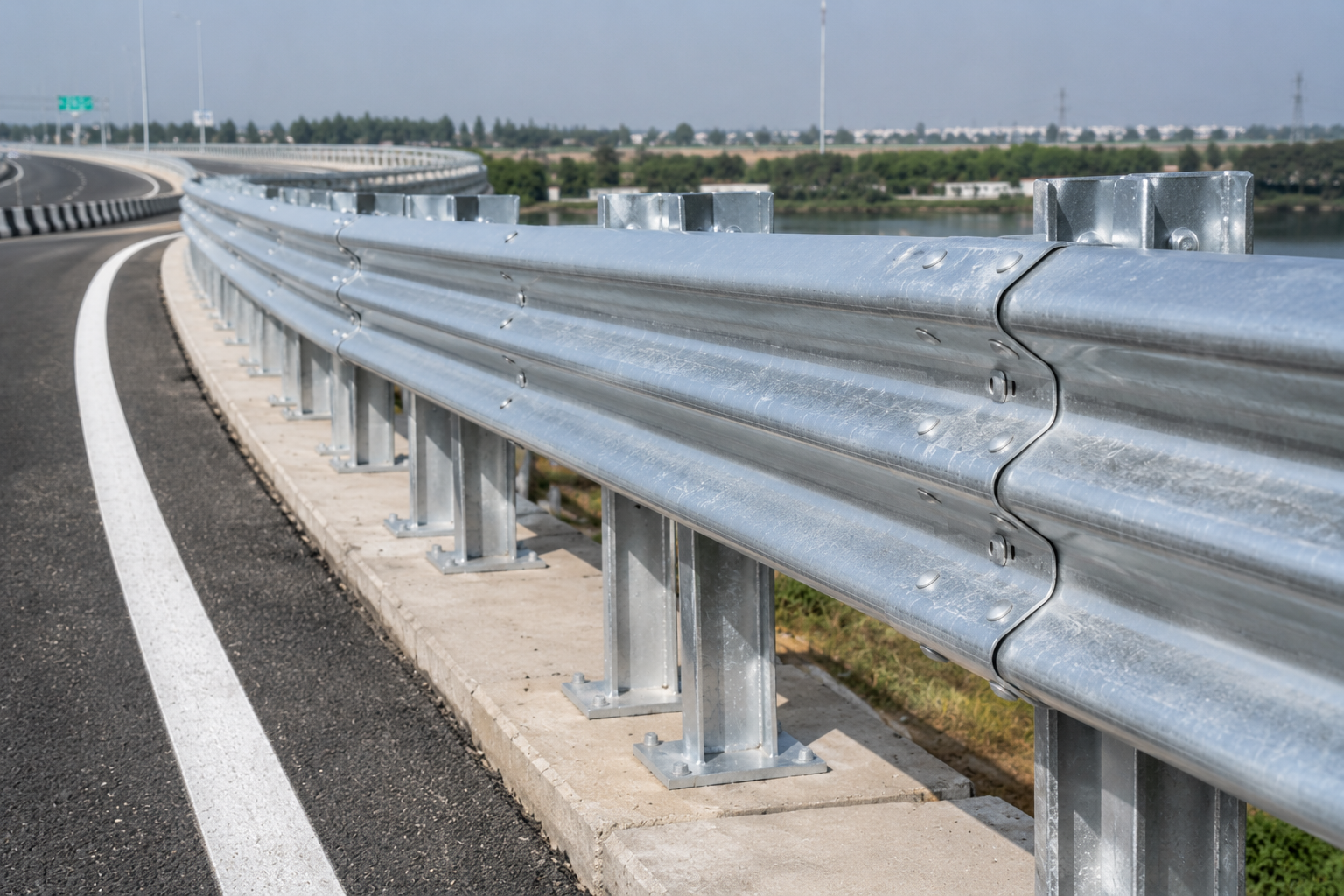
Road Safety & Highway Barriers
Thrie Beam Crash Barrier
MORTH-compliant thrie beam crash barrier systems designed for highways, bridges, medians and high-risk road sections. Manufactured from high-strength steel with hot-dip galvanised coating for superior containment and durability.
View productMBB-5045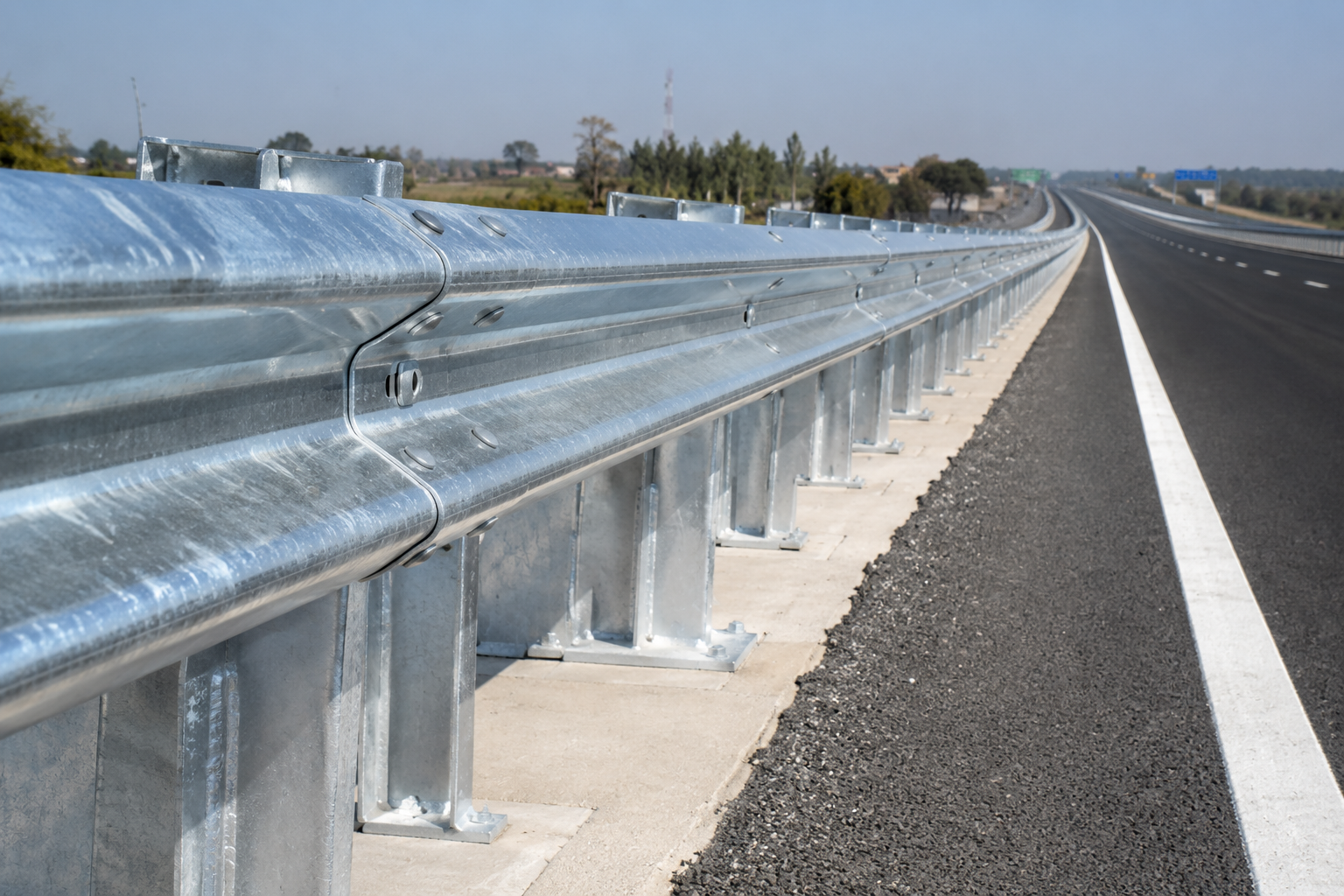
Road Safety & Highway Barriers
Highway Crash Barrier
Highway crash barrier systems designed and manufactured as per MORTH and IRC specifications for highways, expressways, bridges and medians. Available in W Beam and Thrie Beam configurations with hot-dip galvanised finish for maximum durability and road safety.
View productMBB-2613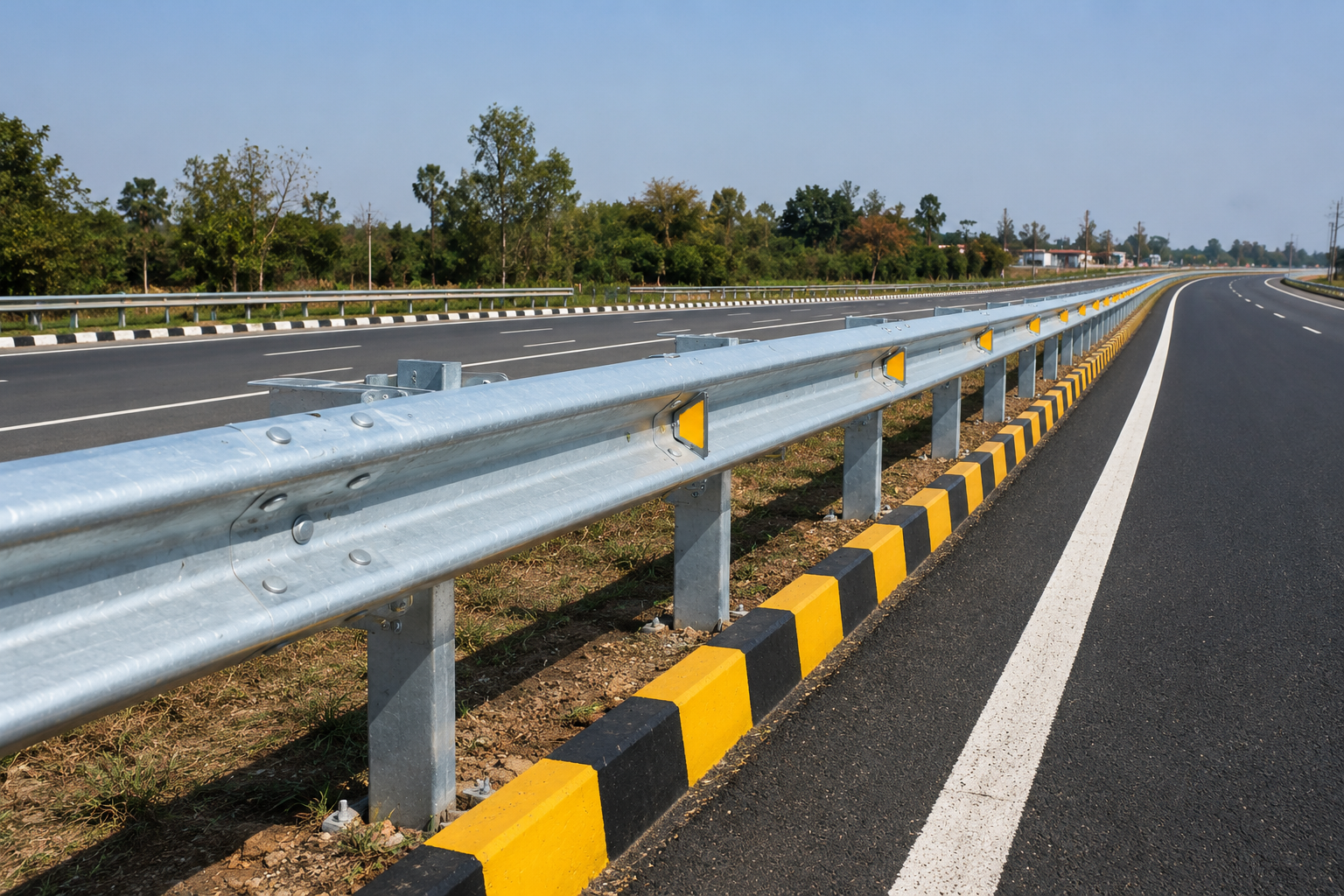
Road Safety & Highway Barriers
Highway Guardrail
Highway guardrail systems manufactured as per MORTH and IRC standards for highways, expressways, bridges and medians. Available in W Beam and Thrie Beam configurations with heavy-duty hot-dip galvanised coating for long-term corrosion protection.
View productMore Guides
Related Thrie Beam Crash Barrier reading
Thrie Beam Crash Barrier · 2026-07-12
Thrie Beam Crash Barrier: When MoRTH Requires the Heavier Profile
The Thrie beam adds a third corrugation for higher containment. Here is where MoRTH and IRC:119 call for it instead of a W Beam.
Read articleThrie Beam Crash Barrier · 2026-06-30
Thrie Beam Crash Barrier Specifications and Dimensions
The Thrie beam's three-corrugation profile, rail thickness, post section and embedment — the specification lines a consultant will inspect.
Read articleThrie Beam Crash Barrier · 2026-06-18
Thrie Beam Crash Barrier for High Containment (H1 and Above)
How the Thrie beam achieves higher containment levels under IRC:119, and where H1-and-above performance is required on Indian highways.
Read articleNeed this for a live project?
Talk to the Metal Beam Barriers desk for specifications, pricing and dispatch.