Thrie Beam Crash Barrier · 2026-06-06
Thrie Beam to W Beam Transition Design
Where a barrier changes profile or meets a structure, the transition is critical. Here is why Thrie-to-W and Thrie-to-parapet transitions must be designed, not improvised.
The problem a transition solves is a sudden change in stiffness. A rigid parapet is far stiffer than a flexible W beam; if the two are simply bolted together, a vehicle striking the join can 'pocket' — snag on the abrupt change — or the flexible barrier can deflect enough to let the vehicle reach the stiff end badly. A transition manages this by increasing stiffness progressively as the run approaches the rigid element.
How it is done. A Thrie-to-W transition uses a purpose-rolled asymmetric section that morphs the three-corrugation Thrie profile into the two-corrugation W profile over a defined length, keeping bolt patterns and rail heights continuous. A transition to a rigid parapet typically nests or doubles the rail, reduces post spacing (often to 1 m or less), and may add a rubrail — stiffening the barrier step by step so there is no abrupt discontinuity.
What inspectors check. Correct transition pieces (not a field-cut splice), continuous rail height, proper lap direction, reduced post spacing through the transition, and secure connection to the parapet anchorage.
Everything else follows the base specification: IS 2062 steel, 3 mm rail, hot-dip galvanising to 550 g/m², galvanised bolts.
Metal Beam Barriers manufactures Thrie-to-W transition pieces and parapet transitions to IRC:119 and MoRTH Section 800 geometry, supplied with the Thrie and W beam runs they connect. Send your junction and structure details for a transition-inclusive quotation.
Related Products
The systems this guide covers
MBB-8360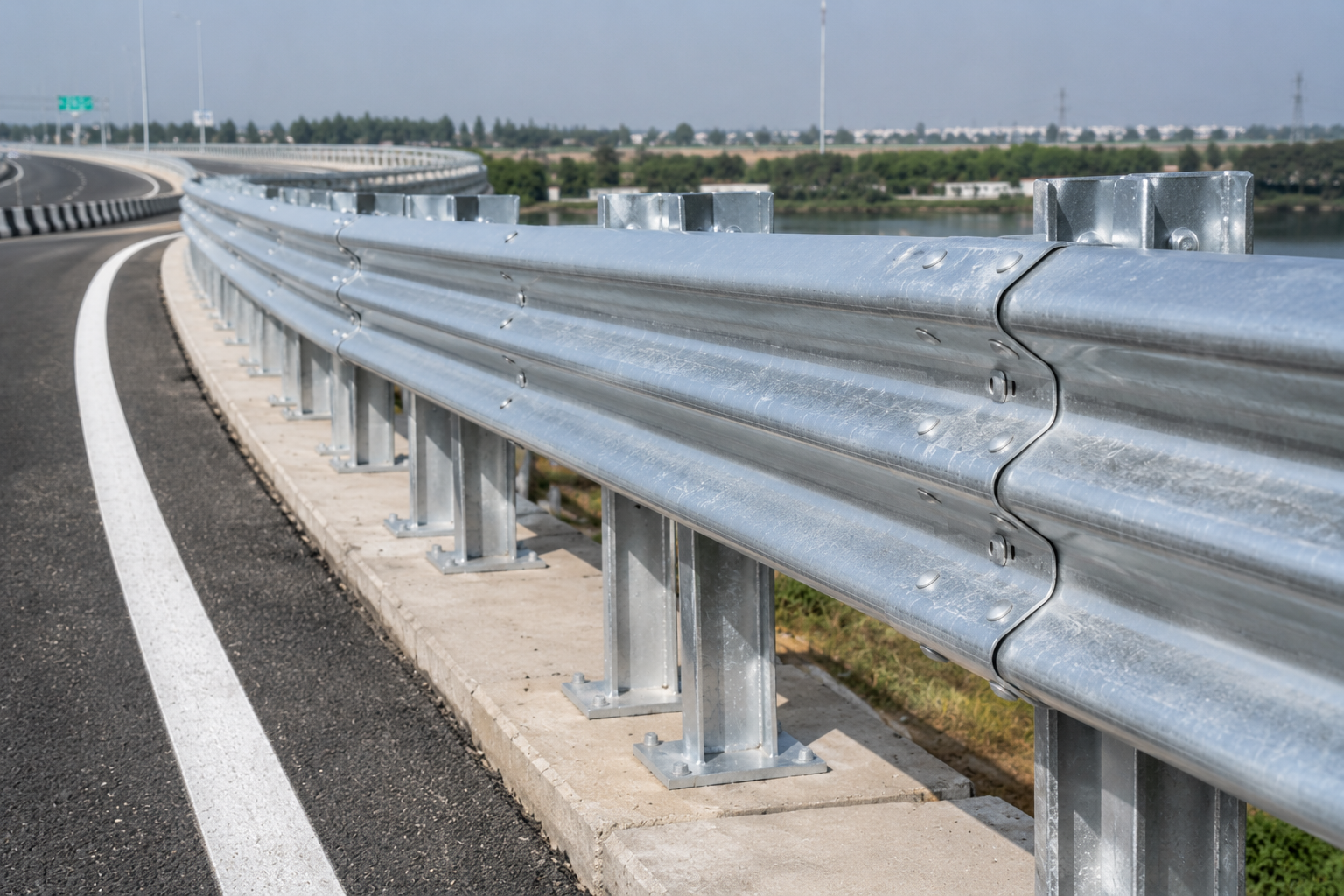
Road Safety & Highway Barriers
Thrie Beam Crash Barrier
MORTH-compliant thrie beam crash barrier systems designed for highways, bridges, medians and high-risk road sections. Manufactured from high-strength steel with hot-dip galvanised coating for superior containment and durability.
View productMBB-5045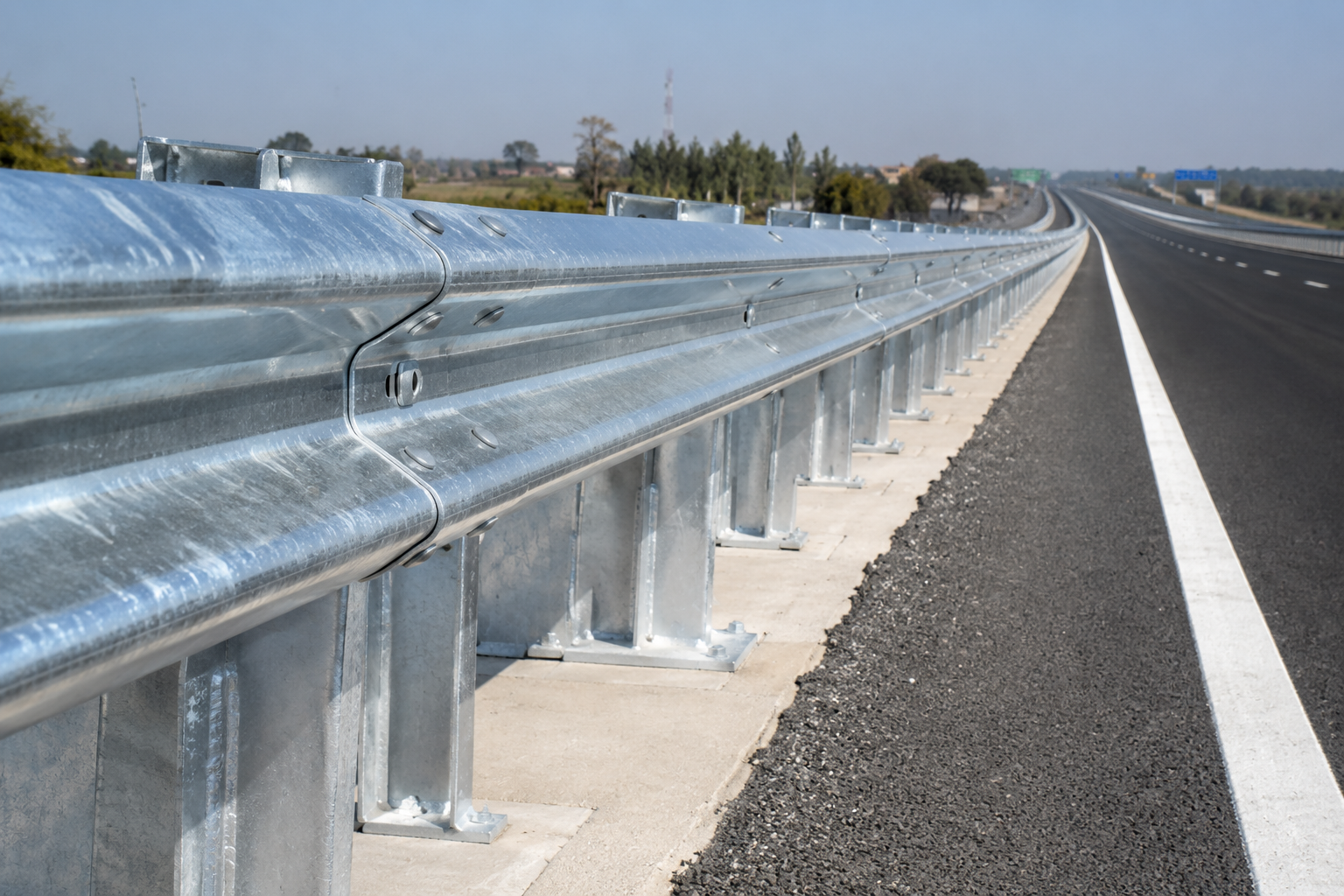
Road Safety & Highway Barriers
Highway Crash Barrier
Highway crash barrier systems designed and manufactured as per MORTH and IRC specifications for highways, expressways, bridges and medians. Available in W Beam and Thrie Beam configurations with hot-dip galvanised finish for maximum durability and road safety.
View productMBB-2613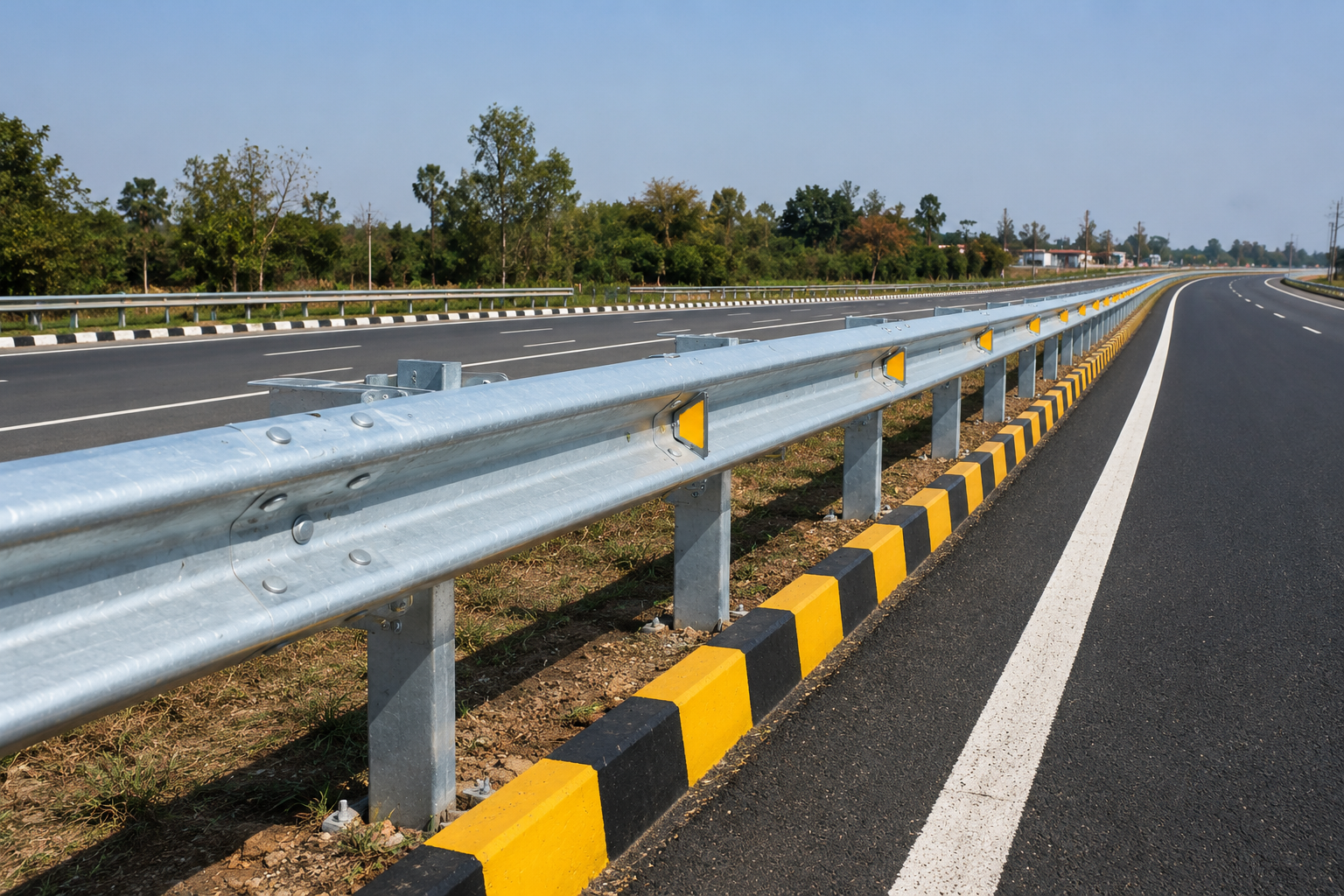
Road Safety & Highway Barriers
Highway Guardrail
Highway guardrail systems manufactured as per MORTH and IRC standards for highways, expressways, bridges and medians. Available in W Beam and Thrie Beam configurations with heavy-duty hot-dip galvanised coating for long-term corrosion protection.
View productMore Guides
Related Thrie Beam Crash Barrier reading
Thrie Beam Crash Barrier · 2026-07-12
Thrie Beam Crash Barrier: When MoRTH Requires the Heavier Profile
The Thrie beam adds a third corrugation for higher containment. Here is where MoRTH and IRC:119 call for it instead of a W Beam.
Read articleThrie Beam Crash Barrier · 2026-06-30
Thrie Beam Crash Barrier Specifications and Dimensions
The Thrie beam's three-corrugation profile, rail thickness, post section and embedment — the specification lines a consultant will inspect.
Read articleThrie Beam Crash Barrier · 2026-06-18
Thrie Beam Crash Barrier for High Containment (H1 and Above)
How the Thrie beam achieves higher containment levels under IRC:119, and where H1-and-above performance is required on Indian highways.
Read articleNeed this for a live project?
Talk to the Metal Beam Barriers desk for specifications, pricing and dispatch.