Thrie Beam Crash Barrier · 2026-04-07
Thrie Beam Crash Barrier Installation Guide
Installing a Thrie beam is like a W Beam but with heavier handling and tighter transition tolerances. Here is the sequence that passes inspection.
1. Setting out. Mark post positions to the design spacing — often 2 m centre-to-centre, reduced to 1 m at hazards, transitions and structures. Set out every transition point (Thrie-to-W and Thrie-to-parapet) and terminal before driving posts, because these govern the whole layout.
2. Post installation. Drive the heavier Thrie-beam posts to the deeper design embedment (commonly 1.8–2.0 m in normal soil) with a hydraulic driver; in rock, drill and grout. Check plumb and top level along the line — the deeper, heavier posts leave less room to correct later.
3. Rail mounting. Thrie beam rails are heavier than W beam and usually need a small crane or a four-person lift. Fix through the spacer/blocking pieces with galvanised high-tensile bolts, lap in the direction of traffic flow, and torque splice bolts in stages to the specified value.
4. Transitions — the critical step. Install Thrie-to-W transition pieces and parapet transitions exactly as designed: correct pieces, reduced post spacing through the transition, continuous rail height, and secure anchorage to the structure. This is where most Thrie beam installations are made or lost at inspection.
5. Inspection. Verify embedment, plumb, rail line and level, splice direction and torque, coating integrity at site-drilled points, transition completeness and terminal treatment, and reflector spacing (IRC:35 / IRC:79).
Material behind the method: IS 2062 steel, 3 mm three-corrugation rail, hot-dip galvanising to 550 g/m².
Metal Beam Barriers supplies Thrie beam crash barriers with the transition pieces, terminals, installation drawings and certificates each project needs. Send your alignment and structure details for a factory-direct quotation.
Related Products
The systems this guide covers
MBB-8360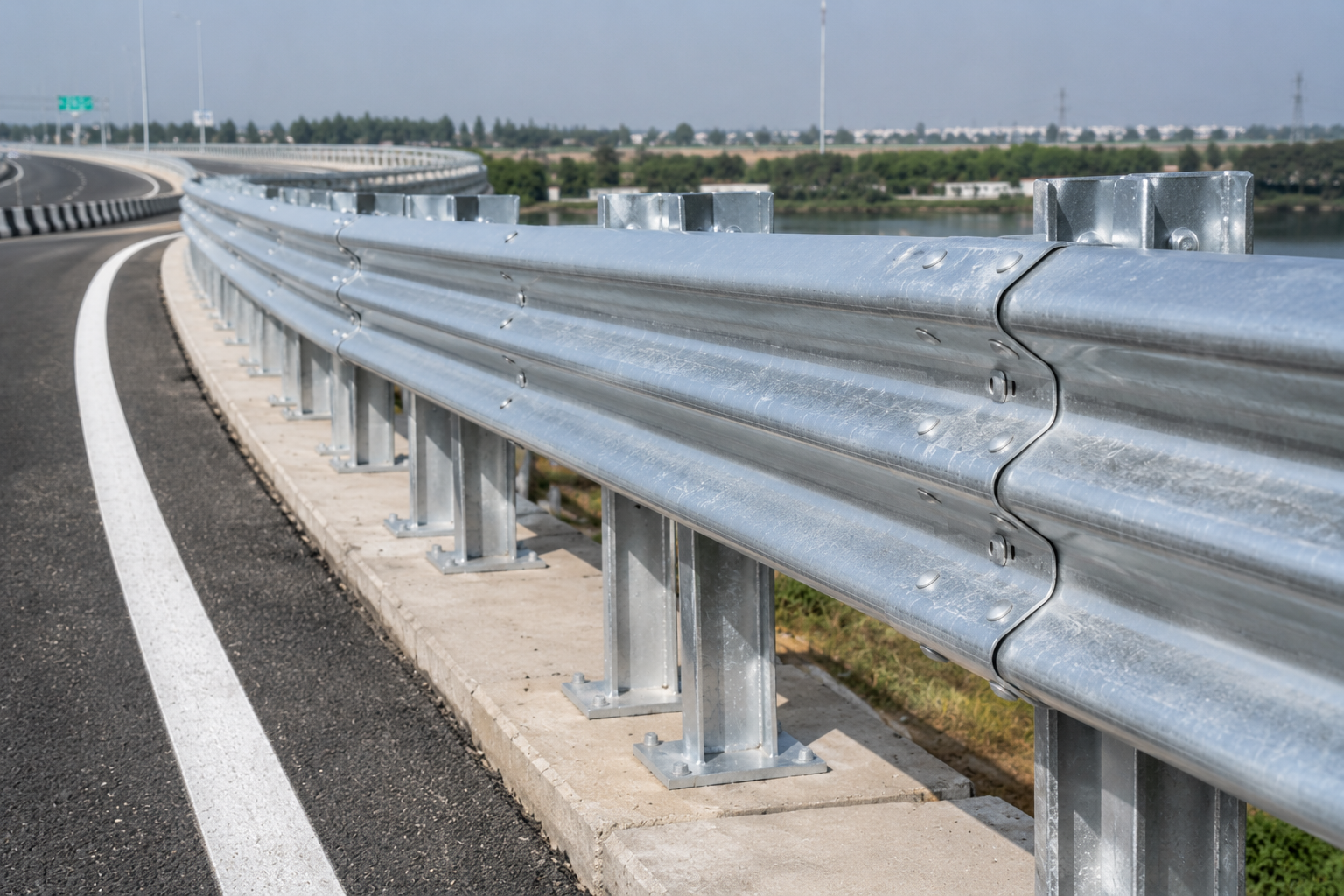
Road Safety & Highway Barriers
Thrie Beam Crash Barrier
MORTH-compliant thrie beam crash barrier systems designed for highways, bridges, medians and high-risk road sections. Manufactured from high-strength steel with hot-dip galvanised coating for superior containment and durability.
View productMBB-5045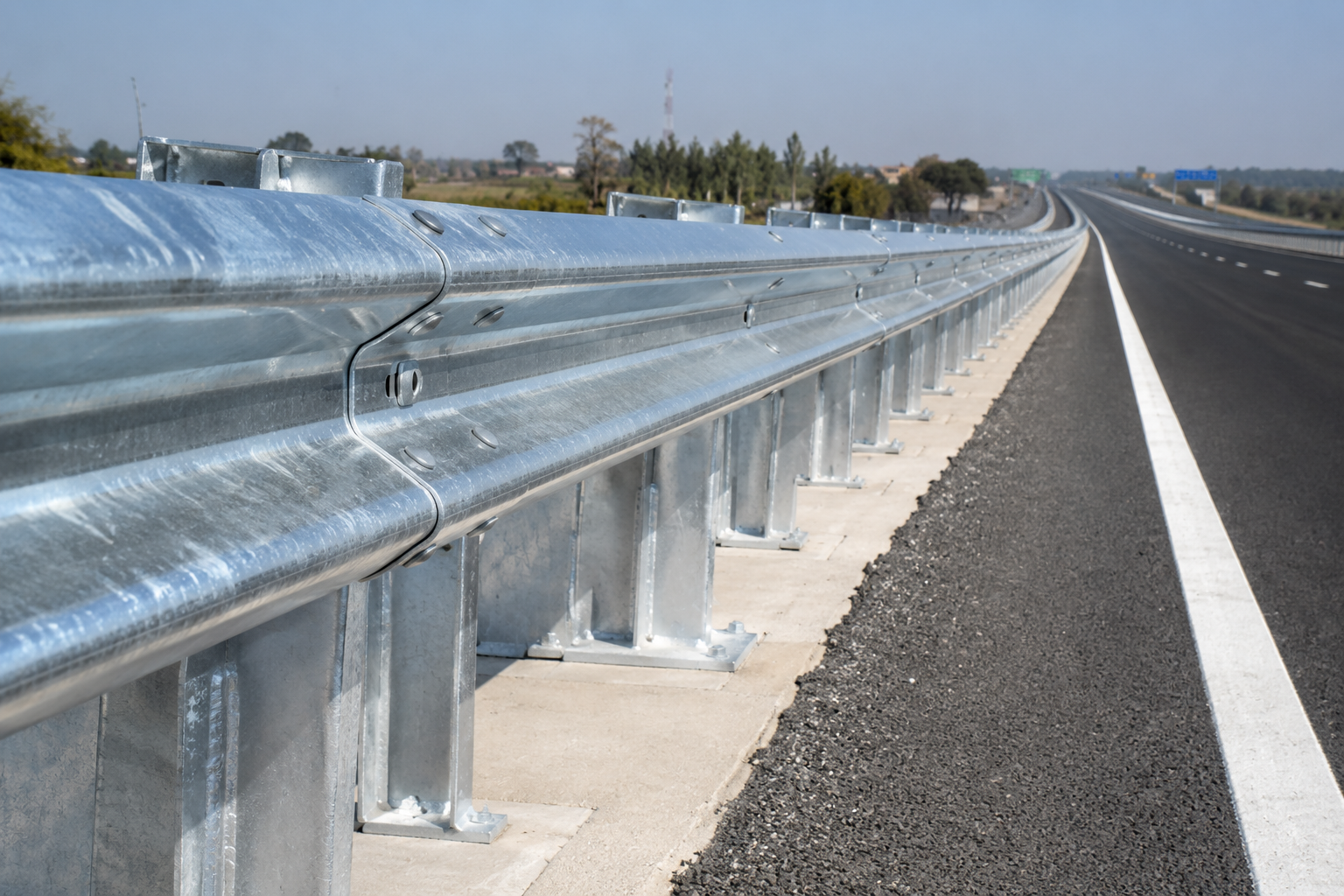
Road Safety & Highway Barriers
Highway Crash Barrier
Highway crash barrier systems designed and manufactured as per MORTH and IRC specifications for highways, expressways, bridges and medians. Available in W Beam and Thrie Beam configurations with hot-dip galvanised finish for maximum durability and road safety.
View productMBB-2613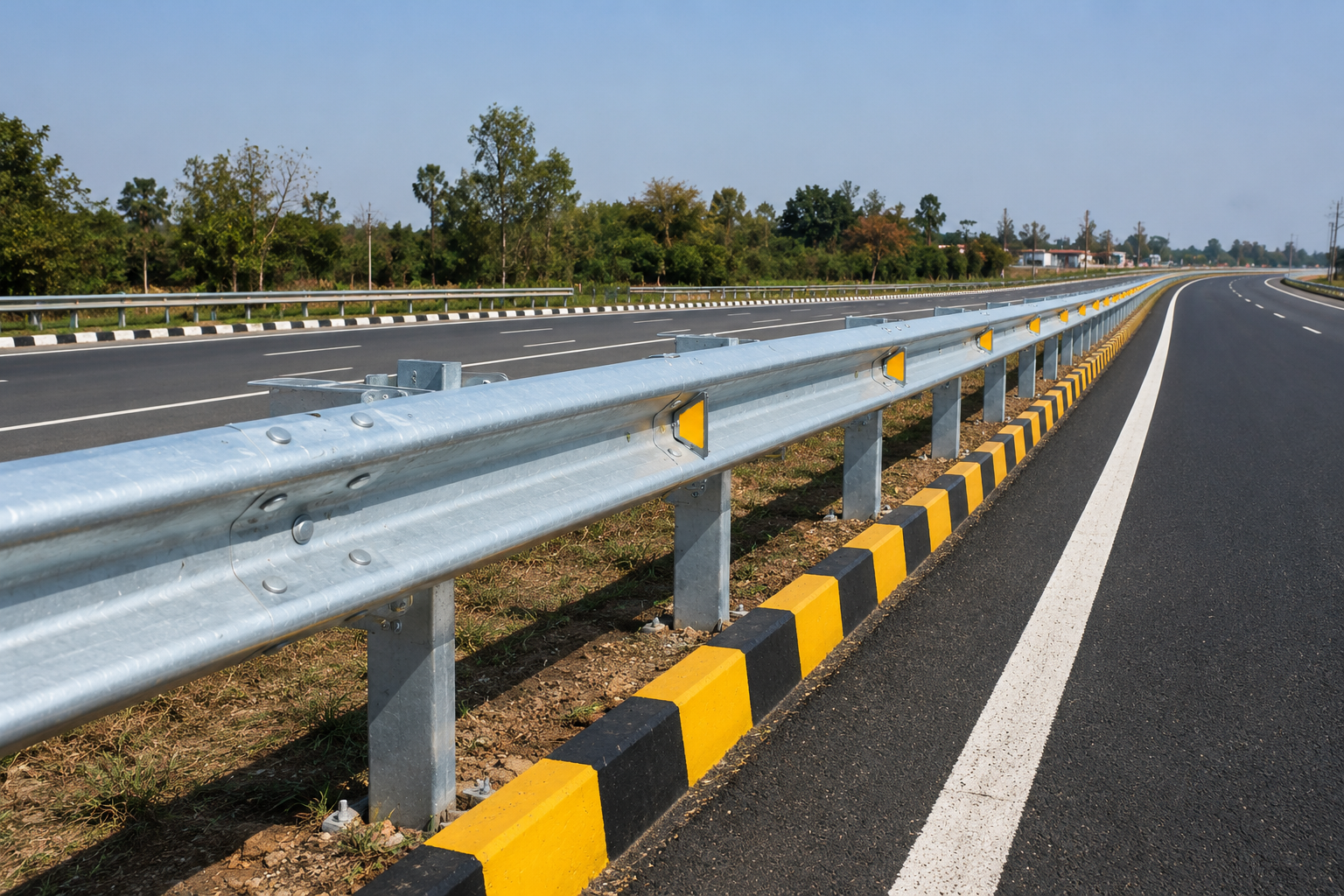
Road Safety & Highway Barriers
Highway Guardrail
Highway guardrail systems manufactured as per MORTH and IRC standards for highways, expressways, bridges and medians. Available in W Beam and Thrie Beam configurations with heavy-duty hot-dip galvanised coating for long-term corrosion protection.
View productMore Guides
Related Thrie Beam Crash Barrier reading
Thrie Beam Crash Barrier · 2026-07-12
Thrie Beam Crash Barrier: When MoRTH Requires the Heavier Profile
The Thrie beam adds a third corrugation for higher containment. Here is where MoRTH and IRC:119 call for it instead of a W Beam.
Read articleThrie Beam Crash Barrier · 2026-06-30
Thrie Beam Crash Barrier Specifications and Dimensions
The Thrie beam's three-corrugation profile, rail thickness, post section and embedment — the specification lines a consultant will inspect.
Read articleThrie Beam Crash Barrier · 2026-06-18
Thrie Beam Crash Barrier for High Containment (H1 and Above)
How the Thrie beam achieves higher containment levels under IRC:119, and where H1-and-above performance is required on Indian highways.
Read articleNeed this for a live project?
Talk to the Metal Beam Barriers desk for specifications, pricing and dispatch.