Thrie Beam Crash Barrier · 2026-05-25
Thrie Beam Crash Barrier at Bridge Parapets and Structures
At bridges and structures, the Thrie beam is the profile that connects a flexible run to a rigid parapet safely. Here is how that connection is designed.
Why the Thrie beam. Its deeper three-corrugation section and higher containment make it the standard profile for the approach to a structure, where impact consequences are high and the barrier must hand a vehicle safely from the flexible corridor to the rigid parapet. The Thrie beam is also the section around which most parapet transitions are built.
The transition problem. A concrete parapet is far stiffer than a flexible barrier. Connect the two abruptly and a vehicle striking the join can pocket against the sudden stiffness or the flexible side can deflect too far near the rigid end. The solution is a designed transition that stiffens the barrier progressively: nested or doubled Thrie rail, post spacing reduced (often to 1 m or less), sometimes a rubrail, and a proper anchored connection to the parapet.
What inspectors verify. The correct transition pieces (not a field-cut adaptation), continuous rail height across the join, the reduced post spacing through the transition length, secure anchorage to the parapet, and no snag points or open rail ends.
Base build. Throughout, the Thrie beam uses IS 2062 steel at 3 mm, heavier posts with deeper embedment, and hot-dip galvanising to a 550 g/m² zinc coating.
Omitting or improvising the structure transition is among the most serious barrier defects, because it fails exactly where consequences are highest.
Metal Beam Barriers manufactures Thrie beam crash barriers and the full range of parapet and approach transitions to IRC:119 and MoRTH Section 800. Send your structure drawings and approach details for a transition-inclusive, factory-direct quotation.
Related Products
The systems this guide covers
MBB-8360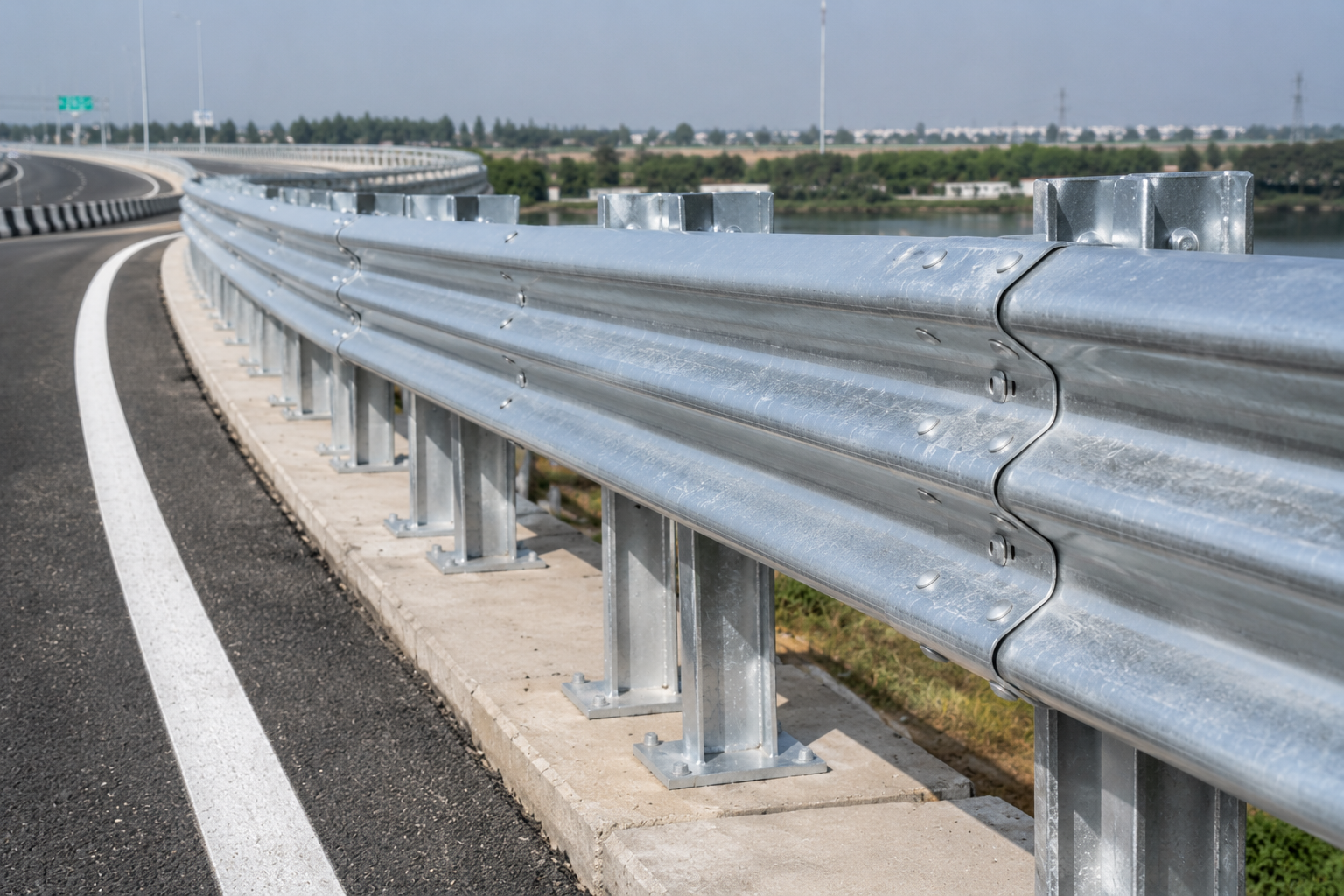
Road Safety & Highway Barriers
Thrie Beam Crash Barrier
MORTH-compliant thrie beam crash barrier systems designed for highways, bridges, medians and high-risk road sections. Manufactured from high-strength steel with hot-dip galvanised coating for superior containment and durability.
View productMBB-5045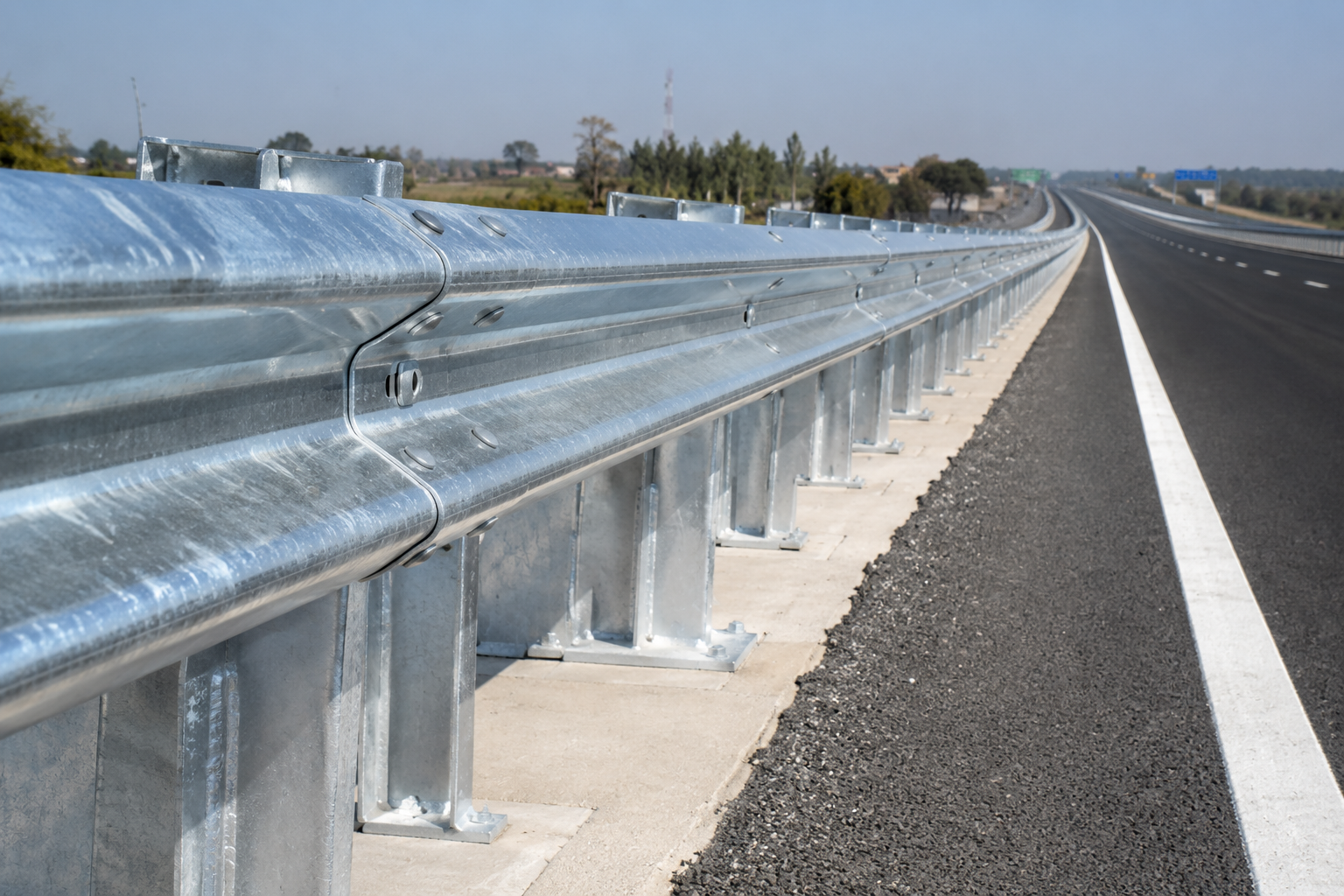
Road Safety & Highway Barriers
Highway Crash Barrier
Highway crash barrier systems designed and manufactured as per MORTH and IRC specifications for highways, expressways, bridges and medians. Available in W Beam and Thrie Beam configurations with hot-dip galvanised finish for maximum durability and road safety.
View productMBB-2613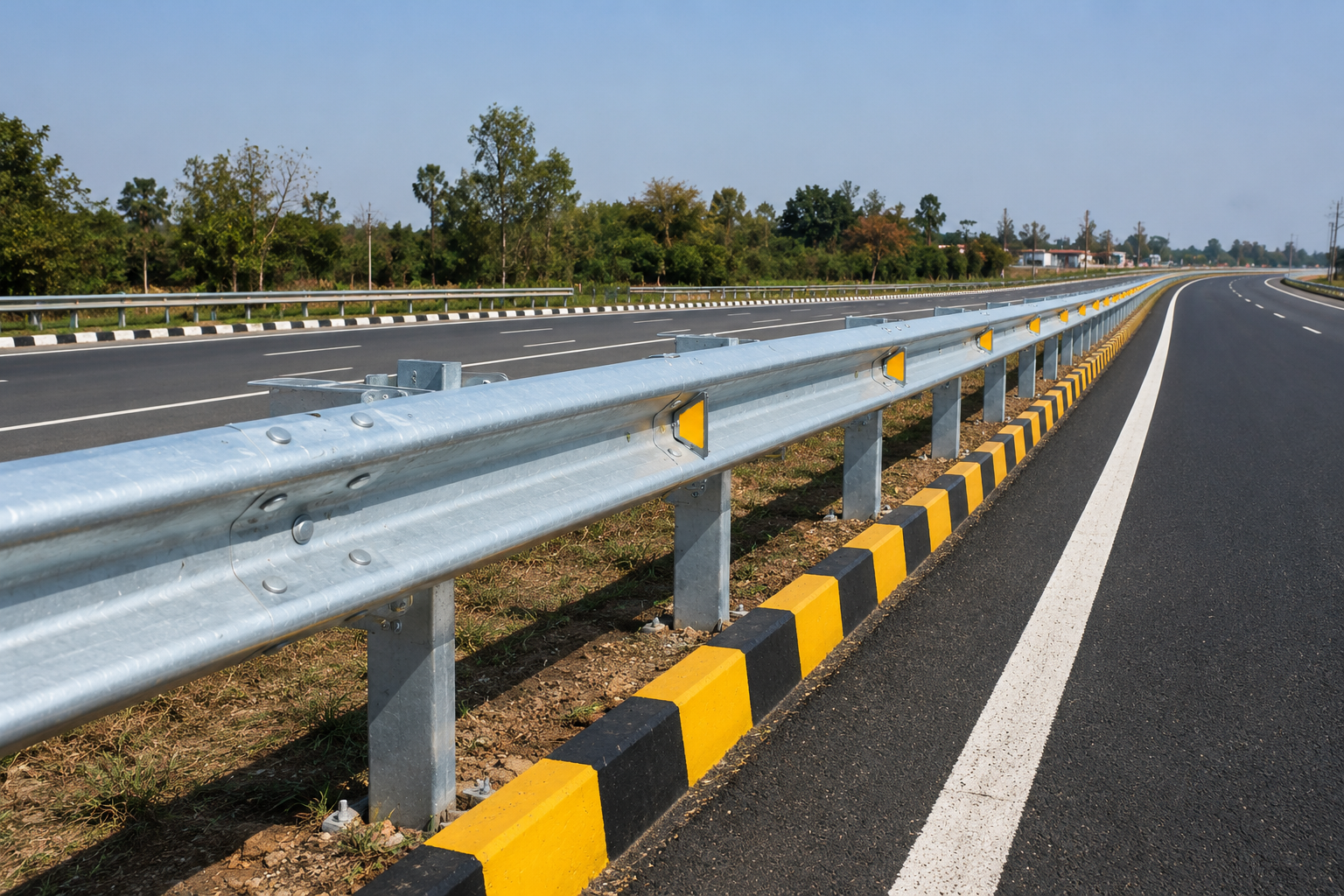
Road Safety & Highway Barriers
Highway Guardrail
Highway guardrail systems manufactured as per MORTH and IRC standards for highways, expressways, bridges and medians. Available in W Beam and Thrie Beam configurations with heavy-duty hot-dip galvanised coating for long-term corrosion protection.
View productMore Guides
Related Thrie Beam Crash Barrier reading
Thrie Beam Crash Barrier · 2026-07-12
Thrie Beam Crash Barrier: When MoRTH Requires the Heavier Profile
The Thrie beam adds a third corrugation for higher containment. Here is where MoRTH and IRC:119 call for it instead of a W Beam.
Read articleThrie Beam Crash Barrier · 2026-06-30
Thrie Beam Crash Barrier Specifications and Dimensions
The Thrie beam's three-corrugation profile, rail thickness, post section and embedment — the specification lines a consultant will inspect.
Read articleThrie Beam Crash Barrier · 2026-06-18
Thrie Beam Crash Barrier for High Containment (H1 and Above)
How the Thrie beam achieves higher containment levels under IRC:119, and where H1-and-above performance is required on Indian highways.
Read articleNeed this for a live project?
Talk to the Metal Beam Barriers desk for specifications, pricing and dispatch.